Growing apples at home is one of the most rewarding long-term gardening projects for beginners. A healthy apple tree can produce fresh fruit for decades, provide shade and seasonal beauty, and turn even a small backyard into a productive mini orchard. While many new gardeners assume apple trees are difficult to maintain, the truth is that most problems come from choosing the wrong variety, planting in the wrong location, or skipping basic yearly care.
The key to success is understanding what apple trees actually need: full sun, good airflow, proper pollination, well-drained soil, and consistent pruning. Once those foundations are in place, apple trees are surprisingly resilient and productive.
One important thing to know before you start is that growing apples requires patience. Most trees will not produce a full harvest immediately. Dwarf apple trees may begin fruiting in as little as 2–3 years, while larger standard trees can take much longer. However, the long-term payoff is worth it. A mature tree can provide baskets of apples every season for fresh eating, baking, cider making, or storage through winter.
In this guide, you’ll learn exactly how to grow apples step by step, including how to choose the right apple variety, plant trees correctly, improve pollination, prevent common diseases, and harvest better fruit as a beginner.
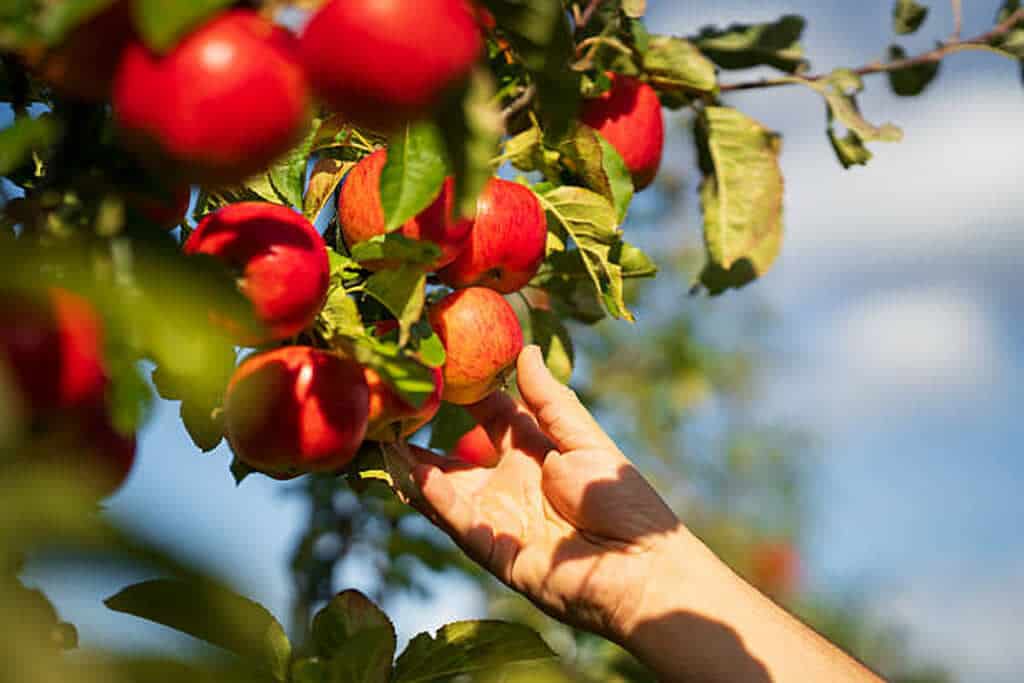
Quick Answer: How to Grow Apples Successfully
Apple trees grow best in full sun with well-drained soil and regular seasonal care. For beginners, the easiest way to grow apples successfully is to start with disease-resistant dwarf or semi-dwarf trees that match your local climate.
ost apple trees need:
- At least 6–8 hours of direct sunlight daily
- Well-drained soil with plenty of organic matter
- Another compatible apple tree nearby for pollination
- Consistent watering during the first few years
- Annual pruning to improve airflow and fruit production
Here’s the basic process:
- Choose an apple variety suited to your climate and space
- Plant the tree in a sunny area with good drainage
- Water deeply and mulch around the base
- Prune the tree every year during dormancy
- Thin excess fruit to improve apple size and tree health
- Monitor for pests and common diseases like apple scab or codling moth
- Harvest apples when they are fully colored and easily detach from the branch
Most dwarf apple trees begin producing fruit within 2–4 years. With proper care, a single healthy tree can remain productive for decades.
Understanding How Apple Trees Grow
Before planting your first apple tree, it helps to understand how apple trees actually develop, produce fruit, and respond to their environment. Many beginner problems — poor fruit production, weak growth, disease issues, or failed harvests — usually happen because the tree was planted in conditions that do not match its biological needs.
Apple trees are long-living perennial fruit trees. Unlike vegetables that complete their life cycle in a single season, apple trees spend years developing root systems, branch structure, and fruit-bearing wood before reaching peak production. A healthy tree can continue producing apples for 20–50 years or more depending on the rootstock and care it receives.
Understanding the basics of climate, growth habits, and tree types will help you choose the right apple tree from the beginning and avoid costly mistakes later.
Apple Trees Need the Right Climate
Apple trees grow best in regions with cold winters and moderate summers. Most traditional apple varieties require a period of winter dormancy called “chill hours.” Chill hours refer to the number of hours temperatures stay between roughly 32°F and 45°F (0°C to 7°C) during winter.
Without enough chill hours:
- Trees may flower poorly
- Buds may open unevenly
- Fruit production may decline
- Trees may struggle to break dormancy properly
This is one reason why some apple varieties perform well in northern climates but fail in warm southern regions.
For example:
- Honeycrisp apples prefer colder climates with long winters
- Anna apples and Dorsett Golden apples are better suited for warm regions with low chill hours
Before buying a tree, always check:
- USDA hardiness zone
- Chill hour requirements
- Heat tolerance
- Disease resistance for your area
Local nurseries usually carry varieties that already perform well in your climate, making them a safer choice for beginners.
How Long Apple Trees Take to Produce Fruit
One of the biggest misconceptions beginners have is expecting apples immediately after planting. In reality, apple trees require time to establish roots and build strong branch systems before producing reliable harvests.
The time to first fruit depends mainly on the tree size and rootstock.
Typical timelines:
- Dwarf apple trees: 2–4 years
- Semi-dwarf apple trees: 4–6 years
- Standard apple trees: 6–10 years
Dwarf trees produce fruit faster because they stay smaller and direct more energy into fruiting rather than large structural growth. This makes them ideal for beginners and backyard gardens.
Even after fruit production begins, the first harvests are usually small. Apple trees gradually increase production as they mature. A young tree may only produce a few apples during early seasons, while a mature healthy tree can eventually produce hundreds.
Patience is an important part of growing apples successfully.
Different Types of Apple Trees
Choosing the right tree size is one of the most important decisions for beginners. Apple trees are generally divided into three main categories based on rootstock size.
Dwarf Apple Trees
Dwarf trees stay compact, usually around 8–10 feet tall.
Advantages:
- Faster fruit production
- Easier pruning and harvesting
- Better for small yards
- Suitable for containers and espalier systems
Disadvantages:
- Shorter lifespan
- Require staking or support
- Need more consistent watering
For most beginners, dwarf apple trees are the easiest option.
Semi-Dwarf Apple Trees
Semi-dwarf trees typically grow 12–18 feet tall.
Advantages:
- Good balance between size and production
- Longer lifespan than dwarf trees
- Easier maintenance than standard trees
Disadvantages:
- Require more space
- Slightly slower fruit production
Semi-dwarf trees are often considered the best overall choice for home orchards.
Standard Apple Trees
Standard trees can grow over 25 feet tall.
Advantages:
- Extremely long lifespan
- Large harvest potential
- Strong root systems
Disadvantages:
- Slow fruit production
- Difficult pruning and harvesting
- Require significant space
Most backyard gardeners no longer choose standard trees unless they have large properties.
Columnar Apple Trees
Columnar trees grow vertically with minimal side branching.
Advantages:
- Ideal for patios and very small spaces
- Decorative appearance
- Easy maintenance
Disadvantages:
- Smaller harvests
- Limited variety selection
These trees work well for urban gardens and container growing.
Grafted Trees vs Growing Apples From Seed
Most apple trees sold in nurseries are grafted trees. Grafting combines:
- A rootstock that controls tree size and hardiness
- A scion, which is the fruit-producing variety
This process ensures the tree produces the exact type of apple advertised.
Growing apples from seed is very different. Apple seeds do not grow “true to type,” meaning the fruit from a seed-grown Honeycrisp apple will likely taste completely different from the original apple.
Seed-grown apple trees also:
- Take much longer to fruit
- Produce unpredictable fruit quality
- May have poor disease resistance
For beginners, grafted nursery trees are strongly recommended because they:
- Produce fruit faster
- Offer predictable harvest quality
- Provide better disease resistance
- Allow you to choose the exact tree size you want
Starting with the right tree dramatically increases your chances of long-term success.
Choosing the Best Apple Variety for Beginners
Choosing the right apple variety is one of the most important decisions you will make when growing apples. Many beginner problems actually start with planting a tree that does not match the local climate, available space, or maintenance level the gardener is prepared for.
Some apple trees produce excellent fruit but are highly vulnerable to disease. Others grow well in cold climates but struggle in warmer regions. Certain varieties need intensive spraying and pruning, while others are naturally resistant and much easier to manage.
For beginners, the goal should not simply be growing the “best tasting” apple. The smarter approach is choosing a variety that is reliable, productive, disease-resistant, and suited to your environment.
Best Easy-to-Grow Apple Varieties
Some apple varieties are much more beginner-friendly than others because they combine good flavor with strong disease resistance and dependable production.
Honeycrisp
Honeycrisp is one of the most popular modern apples because of its extremely crisp texture and sweet flavor.
Advantages:
- Excellent eating quality
- Cold-hardy
- Strong consumer favorite
Disadvantages:
- Can be prone to disease in humid climates
- Requires regular maintenance for best fruit quality
Honeycrisp performs best in cooler northern regions.
Gala
Gala apples are productive, sweet, and widely adaptable.
Advantages:
- Reliable production
- Mild sweet flavor
- Good for fresh eating
- Beginner-friendly
Disadvantages:
- Moderate disease susceptibility
- Requires thinning for larger fruit
Gala is a solid option for many home gardeners.
Fuji
Fuji apples are known for sweetness and long storage life.
Advantages:
- Very sweet fruit
- Excellent storage potential
- Heavy producer
Disadvantages:
- Can grow vigorously without pruning
- Requires good sunlight for best flavor
Fuji works well in many moderate climates.
Granny Smith
Granny Smith apples are famous for tart flavor and strong baking performance.
Advantages:
- Heat tolerant
- Long storage life
- Strong cooking apple
Disadvantages:
- Late harvest season
- Requires warm growing seasons for best ripening
This variety is often easier to grow in warmer regions.
Liberty
Liberty apples are one of the best beginner choices because of their strong disease resistance.
Advantages:
- Resistant to apple scab
- Resistant to fire blight
- Reliable producer
- Lower spray requirements
Disadvantages:
- Less common in grocery stores
- Flavor may vary by climate
For organic or low-maintenance growing, Liberty is an excellent option.
Enterprise
Enterprise apples are another disease-resistant variety ideal for beginners.
Advantages:
- Excellent resistance to major diseases
- Long storage life
- Productive trees
Disadvantages:
- Slightly firmer texture than some dessert apples
- Flavor improves after storage
Enterprise trees are especially useful in humid climates where fungal diseases are common.
Disease-Resistant Apple Trees
Disease resistance matters far more than most beginners realize. Apple trees are vulnerable to several major diseases, including:
- Apple scab
- Fire blight
- Cedar apple rust
- Powdery mildew
Highly susceptible varieties may require multiple fungicide sprays every season just to maintain healthy fruit and foliage.
Disease-resistant varieties reduce:
- Maintenance workload
- Chemical spraying
- Fruit loss
- Leaf damage
- Tree stress
For beginners who want simpler maintenance, resistant varieties are often the best long-term investment.
Good disease-resistant apples include:
- Liberty
- Enterprise
- Freedom
- GoldRush
- Crimson Crisp
- Pristine
Planting resistant varieties also makes organic apple growing much more realistic.
Best Apple Trees for Small Yards
Many people avoid growing apples because they assume apple trees require large orchards. Modern rootstocks make it possible to grow productive trees even in small suburban yards.
Dwarf apple trees are ideal for compact spaces because they stay manageable and produce fruit earlier than larger trees.
Advantages of dwarf trees:
- Easier pruning
- Easier harvesting
- Better pest monitoring
- Smaller spraying area
- Faster fruit production
Popular dwarf rootstocks include:
- M27
- M9
- Bud 9
For extremely limited spaces, espalier systems are another excellent option. Espalier training grows apple trees flat against fences or walls, saving space while improving sunlight exposure and airflow.
Columnar apple trees are another solution for patios and narrow spaces because they grow upright with minimal branching.
Container growing is also possible with dwarf rootstocks, though potted apple trees require more frequent watering and fertilization.
Choosing Apples Based on Your Climate
Climate compatibility is critical when selecting apple trees. A variety that thrives in one region may fail completely in another.
Best Apples for Cold Climates
Cold regions with long winters are ideal for many traditional apple varieties.
Good cold-hardy apples include:
- Honeycrisp
- McIntosh
- Haralson
- Cortland
- Northern Spy
These varieties tolerate freezing winters and benefit from high chill hours.
Best Apples for Moderate Climates
Moderate climates support a wide range of apple varieties.
Reliable options include:
- Gala
- Fuji
- Liberty
- Enterprise
- Pink Lady
These varieties adapt well to many backyard growing conditions.
Best Apples for Warm Climates
Warm regions require low-chill apple varieties because traditional apples may not receive enough winter dormancy.
Low-chill apples include:
- Anna
- Dorsett Golden
- Tropical Beauty
- Ein Shemer
These varieties can produce fruit even in areas with mild winters.
Before purchasing any apple tree, always confirm:
- Chill hour requirements
- USDA zone compatibility
- Disease resistance
- Pollination needs
- Heat tolerance
Starting with a variety suited to your region is one of the easiest ways to avoid frustration and improve long-term success.
Understanding Apple Tree Pollination
Pollination is one of the most misunderstood parts of growing apples. Many beginners plant a single apple tree, wait several years, and then wonder why the tree flowers heavily but never produces fruit. In most cases, the problem is poor pollination.
Unlike some fruit trees, most apple varieties cannot reliably pollinate themselves. They need pollen from another compatible apple tree nearby in order to produce full crops. Without proper pollination, blossoms may fall off early, fruit production may remain extremely low, or apples may develop poorly.
Understanding how apple pollination works before planting can save years of frustration and dramatically improve harvest quality.
Why Most Apple Trees Need Pollination
Most apple trees require cross-pollination. This means pollen from one apple variety must be transferred to the flowers of another compatible variety.
Pollination happens primarily through insects, especially honey bees and native pollinators. Bees move pollen between blossoms while collecting nectar, allowing fertilization to occur.
Once pollination is successful:
- Blossoms begin developing fruit
- Apples grow larger and more evenly
- Fruit production increases significantly
Without pollination:
- Flowers may bloom normally
- Blossoms may drop prematurely
- Fruit may fail to develop
- Harvests may remain very small
Even partially self-fertile apple varieties usually produce better yields when another apple tree is nearby.
Crabapple trees can also act as pollinators because they produce abundant compatible pollen over long bloom periods.
For most home gardeners, planting at least two compatible apple varieties is the safest approach.
Self-Pollinating Apple Varieties
Some apple trees are considered partially self-pollinating, meaning they can produce a limited amount of fruit without another tree nearby.
Common partially self-fertile apples include:
- Golden Delicious
- Granny Smith
- Starkspur varieties
- Braeburn
However, even self-pollinating trees generally produce:
- Larger harvests
- Better fruit quality
- More consistent yearly crops
when paired with another compatible apple variety.
If space is limited, beginners can also:
- Plant multi-grafted trees
- Use columnar trees
- Grow dwarf varieties close together
- Plant a nearby crabapple tree
These options improve pollination without requiring a large orchard.
How to Choose Compatible Pollinator Trees
Not all apple trees can pollinate each other successfully. The trees must bloom around the same time so pollen is available when flowers are open.
Apple varieties are commonly grouped by bloom period:
- Early bloomers
- Mid-season bloomers
- Late bloomers
For successful pollination:
- Bloom periods must overlap
- Trees should be planted within pollination distance
- Bees must have access to blossoms
As a general rule, apple trees should be planted within about 50–100 feet of each other for reliable pollination.
Some apple varieties are poor pollinators because they produce sterile pollen. Triploid apples, such as:
- Mutsu
- Jonagold
- Winesap
often cannot pollinate other trees effectively and require additional pollinator partners nearby.
Before purchasing trees, always check:
- Pollination compatibility charts
- Bloom timing
- Pollination requirements
- Local nursery recommendations
Many nursery labels already list compatible pollinators, making the process easier for beginners.
Common Pollination Problems
Even when two compatible trees are planted, pollination can still fail under poor environmental conditions.
Lack of Pollinators
Low bee activity is one of the most common causes of poor fruit set.
Pollinator activity may decrease because of:
- Heavy pesticide use
- Cold rainy weather during bloom
- Lack of flowering plants nearby
Planting pollinator-friendly flowers near apple trees can help attract more bees during spring.
Frost Damage
Late spring frosts can damage apple blossoms before pollination occurs.
Damaged flowers may:
- Turn brown or black
- Fall prematurely
- Fail to develop fruit
Cold-sensitive varieties are especially vulnerable in areas with unstable spring weather.
Poor Tree Pairing
Sometimes beginners accidentally plant incompatible varieties that bloom at different times.
For example:
- An early bloomer may finish flowering before a late bloomer opens
- Pollen may not transfer successfully between varieties
Checking bloom compatibility before planting prevents this issue.
Excessive Rain During Bloom
Heavy rain can reduce bee activity and wash pollen away from blossoms. Cool wet weather during flowering season often leads to lighter harvests.
Weak Tree Health
Trees under stress from:
- drought
- nutrient deficiencies
- disease
- root damage
may produce fewer viable blossoms, reducing pollination success overall.
Healthy trees with strong spring growth generally attract more pollinators and produce better fruit set.
The Best Location for Planting Apple Trees
Choosing the right planting location has a major impact on the long-term health of an apple tree. Even the best apple variety will struggle if it is planted in poor soil, heavy shade, or an area with constant moisture problems.
Apple trees can live for decades, so it is important to select a location carefully before planting. A good site improves:
- Fruit production
- Disease resistance
- Root development
- Air circulation
- Fruit quality
Many beginner problems such as fungal disease, weak growth, and poor harvests often trace back to poor planting conditions rather than the tree itself.
Sunlight Requirements
Apple trees need full sun to produce healthy growth and quality fruit. In most cases, trees should receive at least 6–8 hours of direct sunlight every day.
Sunlight affects:
- Flower production
- Fruit sweetness
- Fruit color
- Disease resistance
- Overall tree vigor
Trees planted in partial shade often develop:
- Smaller harvests
- Thin weak branches
- Poor fruit ripening
- Increased fungal disease
Morning sunlight is especially valuable because it helps dry moisture from leaves and blossoms early in the day, reducing disease pressure.
Avoid planting apple trees:
- Behind large buildings
- Under mature shade trees
- In narrow dark corners of the yard
Open areas with strong sunlight and airflow are ideal.
Soil Requirements for Apple Trees
Apple trees grow best in fertile, well-drained soil rich in organic matter. Good drainage is critical because apple roots are sensitive to standing water.
Ideal soil conditions include:
- Loose texture
- Moderate moisture retention
- Strong drainage
- Plenty of compost or organic matter
The ideal soil pH for apple trees is usually between 6.0 and 7.0.
Heavy clay soil can create serious problems because water drains slowly, increasing the risk of:
- Root rot
- Fungal disease
- Weak root growth
Very sandy soil can also cause issues because it dries out too quickly and may not retain nutrients effectively.
Before planting, it is a good idea to:
- Test soil pH
- Add compost
- Improve drainage if necessary
- Remove large weeds and grass
Healthy soil creates stronger trees that are more resistant to pests and environmental stress.
Avoiding Poor Planting Locations
Some locations naturally create difficult growing conditions for apple trees.
Low-lying areas called frost pockets can trap cold air during spring nights. Late frosts in these spots may damage blossoms and reduce fruit production.
Areas with constant moisture problems should also be avoided because apple trees dislike wet roots. Standing water after rainfall is usually a warning sign of poor drainage.
Other problematic locations include:
- Extremely windy sites
- Areas near black walnut trees
- Compacted soil near driveways
- Narrow spaces with poor airflow
Poor airflow increases humidity around leaves and fruit, creating ideal conditions for diseases such as:
- Apple scab
- Powdery mildew
- Fire blight
Whenever possible, plant apple trees in open elevated locations where air can move freely around the canopy.
Space Requirements Between Apple Trees
Proper spacing improves sunlight exposure, airflow, and future tree maintenance. Crowded trees compete for nutrients and become more vulnerable to disease.
Spacing recommendations depend on tree size.
Typical spacing:
- Dwarf apple trees: 8–10 feet apart
- Semi-dwarf trees: 12–18 feet apart
- Standard trees: 20–30 feet apart
Proper spacing also improves pollination because bees can move more easily between flowers while maintaining airflow through the orchard.
Beginners sometimes plant young trees too closely because the trees appear small initially. However, mature apple trees expand significantly over time.
Leaving enough space helps with:
- Pruning access
- Harvesting
- Disease prevention
- Sunlight penetration
- Long-term root development
If space is limited, dwarf rootstocks or espalier systems are usually better solutions than overcrowding multiple large trees together.
Step-by-Step Guide to Planting Apple Trees
Planting an apple tree correctly is one of the most important steps in the entire growing process. A tree that starts healthy will establish roots faster, grow more vigorously, and become more resistant to disease and environmental stress later on.
Many long-term problems begin during planting. Trees planted too deep, watered incorrectly, or placed in compacted soil often struggle for years. Taking extra time during the planting stage can dramatically improve the tree’s future growth and fruit production.
Best Time to Plant Apple Trees
The best planting time depends on your climate and the type of tree you purchase.
In most regions, apple trees are planted during:
- Early spring
- Late fall
These cooler seasons allow roots to establish before intense summer heat arrives.
Bare-root apple trees are usually planted in early spring while dormant. These trees are sold without soil around the roots and are often less expensive than container-grown trees.
Advantages of bare-root trees:
- Strong root establishment
- Lower cost
- Easier handling
- Faster adaptation to native soil
Container-grown apple trees offer more flexibility and can be planted later in the season, though they may require more watering initially.
Fall planting works especially well in moderate climates because roots continue developing while the tree remains dormant above ground.
Avoid planting during:
- Extreme summer heat
- Frozen winter soil
- Waterlogged conditions
Cool, mild weather gives newly planted trees the best chance to establish successfully.
Preparing the Soil Before Planting
Healthy soil is the foundation of a productive apple tree. Before planting, it is important to prepare the area properly rather than simply digging a hole and placing the tree inside.
Start by removing:
- Grass
- Weeds
- Rocks
- Competing roots
Grass competition is especially harmful to young apple trees because turf absorbs large amounts of water and nutrients.
If the soil is compacted, loosen the area around the planting site to improve root penetration and drainage.
Adding compost can help:
- Improve soil structure
- Increase moisture retention
- Support beneficial microbes
- Add slow-release nutrients
However, avoid adding excessive fertilizer directly into the planting hole. Too much fertilizer can burn young roots and encourage weak top growth before the roots are fully established.
If drainage is poor, consider:
- Raised beds
- Mounded planting
- Soil amendments
- Alternate planting locations
Apple trees perform best when roots can spread easily through loose, oxygen-rich soil.
How to Plant an Apple Tree Properly
Correct planting depth is critical for long-term tree health. One of the most common beginner mistakes is burying the tree too deeply.
Follow these steps when planting:
1. Dig the Hole
Dig a hole roughly:
- Twice as wide as the root system
- Slightly shallower than the root depth
Wide holes encourage roots to spread outward more easily.
2. Identify the Graft Union
Most nursery apple trees are grafted. The graft union appears as a swollen bump near the lower trunk.
The graft union should remain:
- Several inches above soil level
- Fully exposed after planting
If buried, the scion may grow roots and eliminate the size-control benefits of the rootstock.
3. Spread the Roots Carefully
For bare-root trees:
- Spread roots naturally outward
- Trim damaged root ends if necessary
- Avoid bending roots sharply upward
Healthy root positioning improves early establishment.
4. Backfill With Native Soil
Refill the hole using the original soil removed from the site.
Gently firm the soil:
- Remove large air pockets
- Avoid compacting excessively
Overly compacted soil restricts root growth and drainage.
5. Water Deeply After Planting
Deep watering helps:
- Settle soil around roots
- Eliminate air gaps
- Reduce transplant stress
Newly planted trees usually need consistent moisture during the first growing season.
6. Apply Mulch Correctly
Spread mulch around the base of the tree to:
- Retain moisture
- Suppress weeds
- Moderate soil temperature
Keep mulch several inches away from the trunk to prevent:
- Rot
- Pest problems
- Excess moisture buildup
A mulch ring is far healthier than grass growing directly against the tree.
Common Planting Mistakes
Many beginner mistakes are easy to avoid once you understand what young apple trees need.
Planting Too Deep
Buried trunks can develop:
- Rot
- Weak growth
- Poor root oxygen levels
Always keep the graft union above soil level.
Overwatering
Young trees need moisture, but constantly saturated soil can suffocate roots and encourage disease.
Signs of overwatering include:
- Yellow leaves
- Slow growth
- Wilting despite wet soil
Mulching Against the Trunk
Piling mulch directly against bark traps moisture and attracts pests such as rodents and insects.
Leave a gap around the trunk base.
Poor Tree Spacing
Planting trees too closely reduces airflow and increases disease pressure as the canopy matures.
Always account for mature tree size, not just the small nursery size at planting time.
Ignoring Support Needs
Some dwarf rootstocks require staking for several years because their root systems are smaller and less stable.
Without support, strong winds may tilt or damage young trees.
Proper planting gives apple trees a strong foundation for decades of future growth and fruit production.
How to Care for Apple Trees Year-Round
After planting, consistent yearly care is what determines whether an apple tree becomes healthy and productive or weak and disease-prone. Young apple trees are especially sensitive during their first few seasons because they are still developing roots and structural branches.
Good maintenance does not need to be complicated, but it does need to be consistent. Apple trees respond best to steady watering, proper pruning, balanced nutrition, and regular monitoring for pests and disease.
Many beginner problems happen because trees are either neglected entirely or overmanaged with excessive fertilizer, watering, or pruning. The goal is to support steady healthy growth without creating unnecessary stress.
Watering Apple Trees Correctly
Watering is one of the most important parts of apple tree care, especially during the first few years after planting.
Young apple trees need deep watering to encourage roots to grow downward into the soil rather than staying near the surface.
In general:
- Newly planted trees need more frequent watering
- Mature trees become more drought tolerant
- Deep watering is better than shallow daily watering
During dry weather, young trees usually benefit from slow deep watering once or twice per week rather than light surface watering every day.
The exact amount depends on:
- Climate
- Soil type
- Rainfall
- Tree size
Sandy soils dry out faster and require more frequent watering, while clay soils hold moisture longer.
Signs of underwatering include:
- Wilting leaves
- Curling foliage
- Small fruit
- Premature fruit drop
- Dry cracked soil
Signs of overwatering include:
- Yellow leaves
- Weak growth
- Constantly wet soil
- Root rot symptoms
Overwatering is often more dangerous than temporary dryness because apple roots require oxygen in the soil to survive.
Mulching around the tree helps stabilize soil moisture and reduces watering frequency.
Mulching Apple Trees
Mulch provides several major benefits for apple trees:
- Conserves soil moisture
- Reduces weed competition
- Moderates soil temperature
- Improves soil quality over time
Organic mulch slowly breaks down and feeds beneficial organisms within the soil.
Good mulch materials include:
- Wood chips
- Shredded bark
- Straw
- Compost
- Leaf mold
A mulch ring around the tree base is especially helpful for young trees because grass competes aggressively for water and nutrients.
Apply mulch:
- 2–4 inches deep
- Several feet around the base
- Away from direct trunk contact
Never pile mulch directly against the trunk. Excess moisture against bark can encourage:
- Rot
- Fungal disease
- Rodent damage
- Insect problems
Mulch should resemble a flat donut shape around the tree rather than a volcano piled against the trunk.
Fertilizing Apple Trees
Apple trees need nutrients for healthy growth, but excessive fertilizer can cause more harm than good.
Young trees primarily need nutrients to:
- Build root systems
- Develop strong branches
- Produce healthy leaves
However, too much fertilizer — especially nitrogen — can create overly vigorous leafy growth with poor fruit production.
Excess nitrogen may also increase vulnerability to:
- Fire blight
- Aphids
- Weak branch growth
In many home gardens, healthy soil with compost may provide enough nutrition without heavy fertilization.
If growth appears weak, balanced fertilizers can help support development.
Apple trees usually benefit most from fertilization:
- In early spring
- Before active growth begins
Avoid fertilizing late in the season because it may encourage tender new growth that becomes vulnerable to winter injury.
Soil testing is the most accurate way to determine nutrient deficiencies before adding fertilizer unnecessarily.
Supporting Young Apple Trees
Young apple trees are more vulnerable to environmental stress than mature trees. Extra support during the early years can prevent long-term structural problems.
Some dwarf rootstocks naturally develop smaller root systems and may require staking for stability.
Proper stakes help:
- Prevent leaning
- Reduce wind damage
- Protect developing roots
Tree ties should remain loose enough to allow slight movement while still providing support.
Young trees may also benefit from trunk guards to protect against:
- Rodents
- Rabbits
- Sunscald
- Mechanical damage from lawn equipment
Winter sun can sometimes heat bark during the day before rapid nighttime freezing causes cracking. Protective wraps or guards help reduce this risk in colder climates.
Wind protection is especially important during the establishment phase because strong winds can loosen newly forming roots and slow growth.
Healthy early development creates stronger branch structure and improves future fruit production. Trees that establish well during the first few seasons are usually easier to maintain for decades afterward.
How to Prune Apple Trees
Pruning is one of the most important skills for successful apple growing. A properly pruned apple tree produces healthier growth, better airflow, stronger branches, and higher-quality fruit. Trees that are never pruned often become overcrowded, weak, and much more vulnerable to pests and disease.
Many beginners are afraid to prune because they worry about damaging the tree. In reality, apple trees are highly responsive to pruning, and regular maintenance is necessary for long-term productivity.
The goal of pruning is not simply to make the tree look smaller. Good pruning improves the overall structure of the tree so sunlight and air can reach every major branch.
Why Pruning Is Essential
Apple trees naturally produce dense branching over time. Without pruning, the canopy becomes crowded and blocks sunlight from reaching interior branches.
Poor airflow and low sunlight create ideal conditions for:
- Apple scab
- Powdery mildew
- Rotting fruit
- Weak branch development
Proper pruning improves:
- Air circulation
- Sunlight penetration
- Fruit size
- Fruit color
- Branch strength
- Disease prevention
Pruning also helps the tree direct energy toward productive branches instead of excessive leafy growth.
Another major benefit is structural safety. Heavy apple crops can break weak or poorly angled branches. Training strong branch structure early reduces future damage.
Well-pruned trees are also:
- Easier to spray
- Easier to inspect
- Easier to harvest
- Easier to manage overall
Best Time to Prune Apple Trees
Most major pruning is done during the dormant season, usually in late winter or very early spring before new growth begins.
Dormant pruning offers several advantages:
- Tree structure is easier to see
- Fewer disease problems
- Strong spring regrowth
- Reduced stress on the tree
Avoid heavy pruning during extremely cold weather because fresh cuts may become damaged.
Summer pruning is sometimes used for minor maintenance and growth control. Light summer pruning can help:
- Reduce excessive vigor
- Improve sunlight exposure
- Slow overly aggressive growth
However, heavy summer pruning may weaken the tree if done excessively.
For beginners, late winter pruning is usually the easiest and safest approach.
Basic Apple Tree Pruning Techniques
The exact pruning style depends on the tree type and training system, but several core principles apply to most apple trees.
Remove Dead, Damaged, and Diseased Branches
Start by removing:
- Broken branches
- Diseased wood
- Dead limbs
- Branches rubbing together
Removing damaged material improves airflow and prevents disease spread.
Cuts should be clean and made just outside the branch collar rather than leaving long stubs.
Maintain a Central Leader Structure
Most backyard apple trees are trained using a central leader system. This means the tree has:
- One dominant vertical trunk
- Well-spaced side branches
- Balanced scaffold structure
The central leader system helps:
- Strengthen branch angles
- Improve sunlight penetration
- Support heavy fruit loads
Branches growing at narrow upright angles are often weaker and more prone to splitting under fruit weight.
Thin Out Crowded Growth
Apple trees produce many small shoots every season. Overcrowded interior growth reduces airflow and light penetration.
Remove:
- Crossing branches
- Inward-growing shoots
- Excess vertical growth
- Weak shaded branches
A healthy canopy should allow sunlight to reach most areas of the tree.
Many growers use the rule that birds should theoretically be able to fly through the canopy without difficulty.
Control Tree Height
Maintaining manageable height is important for:
- Easier harvesting
- Safer pruning
- Better spraying coverage
- Reduced branch breakage
Tall neglected trees become much harder to maintain over time.
Dwarf and semi-dwarf trees are naturally easier to control, but all apple trees benefit from balanced height management.
Common Pruning Mistakes
Pruning mistakes are common among beginners, but most are easy to correct over time.
Over-Pruning
Removing too much wood at once can overstimulate growth and weaken fruit production.
Heavy pruning often causes:
- Excessive water sprouts
- Delayed fruiting
- Stress growth
As a general rule, avoid removing more than about one-third of the canopy in a single season.
Ignoring Water Sprouts
Water sprouts are fast-growing vertical shoots that often appear after pruning.
These shoots:
- Produce little useful fruit
- Crowd the canopy
- Waste tree energy
Most water sprouts should be removed early before they thicken.
Topping the Tree
Some beginners cut the top of the tree flat across to reduce height quickly. This practice, called topping, creates weak chaotic regrowth and damages tree structure.
Proper height reduction should always involve selective branch removal rather than flat cuts across the canopy.
Leaving Crowded Branch Angles
Branches with narrow angles are weaker and more likely to split under heavy fruit loads or snow.
Strong scaffold branches usually grow at wider angles from the trunk.
Avoiding Pruning Entirely
Neglected trees gradually become:
- Dense
- Diseased
- Difficult to harvest
- Less productive
Even light annual pruning is far better than allowing years of unmanaged growth.
Consistent pruning creates healthier trees, improves fruit quality, and makes long-term apple tree care significantly easier.
How to Increase Apple Production
Once an apple tree begins producing fruit, the next goal is improving both yield and fruit quality. Many beginners focus only on getting apples to grow, but healthy production depends on much more than simply allowing fruit to remain on the tree.
Apple trees naturally try to produce more fruit than they can properly support. Without proper management, this often leads to:
- Small apples
- Weak branch growth
- Biennial bearing patterns
- Increased disease pressure
- Premature fruit drop
Improving apple production involves balancing the tree’s energy so it can consistently produce healthy, high-quality fruit year after year.
Why Fruit Thinning Matters
Fruit thinning is one of the most overlooked parts of apple tree care. Many beginners assume that keeping every developing apple will maximize harvests, but overcrowded fruit actually reduces overall quality.
When too many apples develop on a branch:
- Individual apples stay smaller
- Flavor may decline
- Branches become stressed
- Fruit weight may break limbs
- Trees may produce fewer apples the following year
Apple trees naturally perform some thinning on their own through “June drop,” where weak or excess fruit falls early in the season. However, manual thinning is often still necessary for the best results.
Proper thinning helps:
- Increase fruit size
- Improve sweetness
- Reduce branch breakage
- Improve air circulation
- Encourage consistent yearly production
Trees carrying excessive fruit one year often rest the following season, producing little or no harvest. This cycle is called biennial bearing.
Regular thinning helps stabilize production from year to year.
How to Thin Apples Properly
The best time to thin apples is usually shortly after natural fruit drop, when apples are still small.
A common guideline is:
- Leave one healthy apple per cluster
- Space apples roughly 6–8 inches apart along branches
When choosing which fruit to remove:
- Keep the healthiest-looking apple
- Remove damaged or misshapen fruit
- Remove smaller weaker apples
Thinning may feel wasteful at first, but the remaining apples usually become:
- Larger
- Sweeter
- More evenly developed
- Less prone to disease
Thinning also reduces stress on young branches and improves sunlight penetration throughout the canopy.
For dwarf trees especially, thinning is extremely important because heavy crops can overwhelm the smaller branch structure.
Improving Pollination Naturally
Good pollination directly affects both fruit quantity and quality. Even partially successful pollination can result in:
- Uneven fruit shape
- Small apples
- Reduced fruit set
Encouraging pollinators naturally is one of the best ways to improve production.
Helpful strategies include:
- Planting pollinator-friendly flowers nearby
- Avoiding insecticides during bloom season
- Providing diverse flowering plants throughout spring
- Supporting native bee populations
Good companion flowers for orchards include:
- Lavender
- Borage
- Clover
- Calendula
- Wildflowers
Healthy pollinator activity improves fertilization rates and often increases total harvest size.
Weather also affects pollination. Cool rainy conditions during bloom season may temporarily reduce bee activity and lower fruit production.
How to Encourage Bigger, Sweeter Apples
Fruit quality depends heavily on sunlight, moisture balance, and tree health.
Increase Sunlight Exposure
Apples exposed to better sunlight generally develop:
- More sugar
- Better color
- Stronger flavor
- Improved ripening
Pruning crowded branches improves light penetration and helps fruit mature more evenly.
Maintain Consistent Watering
Inconsistent watering can reduce fruit quality and cause:
- Cracking
- Bitter flavor
- Small fruit
- Premature drop
Trees need especially consistent moisture during:
- Fruit enlargement
- Hot summer periods
- Drought conditions
Deep watering is more effective than frequent shallow watering.
Avoid Excess Nitrogen
Too much nitrogen fertilizer encourages leafy growth instead of fruit production.
Excess nitrogen may result in:
- Vigorous shoots
- Delayed fruiting
- Softer apples
- Increased disease problems
Balanced nutrition is more important than aggressive fertilization.
Improve Airflow Around Fruit
Good airflow reduces humidity around apples and lowers the risk of fungal diseases.
Better airflow also:
- Improves drying after rain
- Increases sunlight exposure
- Helps fruit color develop properly
Annual pruning plays a major role in maintaining healthy airflow.
Protect Trees From Stress
Trees under environmental stress often produce lower-quality fruit.
Common stress factors include:
- Drought
- Root damage
- Severe pest infestations
- Nutrient deficiencies
- Overcrowded canopies
Healthy well-maintained trees consistently produce better apples than neglected trees, even when growing conditions are similar.
Improving apple production is usually about balance rather than maximizing growth. Trees that receive proper pruning, thinning, watering, and pollination support generally reward growers with larger harvests and significantly better fruit quality over time.
Common Apple Tree Problems and How to Fix Them
Even healthy apple trees occasionally develop problems. Leaves may turn yellow, fruit may fall early, blossoms may fail to produce apples, or the tree may suddenly stop growing well. For beginners, these issues can feel confusing because multiple problems often produce similar symptoms.
The good news is that most apple tree problems are manageable once the underlying cause is identified. In many cases, the solution involves improving watering habits, pruning, pollination, or overall tree health rather than using aggressive treatments.
Learning how to recognize common warning signs early makes it much easier to prevent serious long-term damage.
Apple Tree Not Producing Fruit
One of the most common frustrations for beginners is a healthy-looking tree that never produces apples.
Several factors can cause this problem.
The Tree Is Still Too Young
Young apple trees need time before producing fruit. Depending on the rootstock:
- Dwarf trees may fruit in 2–4 years
- Semi-dwarf trees may take 4–6 years
- Standard trees may require much longer
Newly planted trees often focus first on root and branch development.
Poor Pollination
Many apple trees bloom heavily but fail to set fruit because they lack compatible pollinators nearby.
Common pollination problems include:
- Only one apple tree planted
- Incompatible bloom periods
- Low bee activity
- Cold rainy weather during flowering
Adding a compatible pollinator tree often solves this issue quickly.
Excess Nitrogen Fertilizer
Too much nitrogen encourages leafy growth instead of fruit production.
Trees receiving excessive fertilizer may develop:
- Large vigorous shoots
- Dense foliage
- Very few apples
Balanced nutrition is important for proper fruiting.
Late Frost Damage
Spring frosts can damage blossoms before fruit develops.
Frost-damaged flowers may:
- Turn brown or black
- Fall off early
- Fail to develop fruit
This problem is especially common in low-lying frost-prone areas.
Read more: Why Is My Apple Tree Not Producing Fruit? Causes & Fixes
Apples Falling Early
Premature fruit drop is another common issue, especially for young or stressed trees.
Some fruit drop is normal. Apple trees naturally remove excess fruit during early summer in a process called June drop.
However, excessive fruit drop may signal larger problems.
Water Stress
Irregular watering is one of the biggest causes of early fruit drop.
Both:
- Drought stress
- Overwatering
can trigger apples to fall before maturity.
Consistent deep watering is important during hot weather and fruit development.
Overloaded Branches
Trees carrying too many apples may shed fruit naturally to reduce stress.
Fruit thinning helps reduce this problem.
Heat and Environmental Stress
Extreme heat, strong winds, and rapid temperature swings can also increase fruit drop.
Young trees are especially sensitive to environmental stress.
Small or Bitter Apples
Poor fruit quality often results from overcrowding, weak sunlight, or inconsistent care.
Lack of Fruit Thinning
Too many apples competing for resources usually leads to:
- Smaller fruit
- Reduced sweetness
- Uneven ripening
Proper thinning allows remaining apples to develop fully.
Poor Sunlight Exposure
Shaded apples receive less energy for sugar production.
Dense unpruned canopies often produce:
- Pale apples
- Bland flavor
- Poor color development
Pruning improves sunlight penetration throughout the tree.
Nutrient Imbalances
Low potassium or unbalanced soil nutrition may reduce fruit quality and sweetness.
Excess nitrogen can also produce watery, less flavorful apples.
Leaves Turning Yellow
Yellowing leaves usually indicate stress somewhere within the root system or nutrient balance.
Overwatering
Waterlogged soil reduces oxygen availability around roots.
Symptoms often include:
- Yellow leaves
- Weak growth
- Wilting despite wet soil
Improving drainage and reducing watering frequency usually helps.
Nutrient Deficiencies
Deficiencies involving:
- Nitrogen
- Iron
- Magnesium
can cause yellow foliage.
Soil testing helps determine whether nutrients are actually lacking before adding fertilizer unnecessarily.
Poor Drainage
Compacted or heavy clay soils may keep roots constantly wet, increasing stress and reducing nutrient uptake.
Healthy roots require both moisture and oxygen.
Cracked or Split Apples
Apples sometimes split open near harvest, especially after periods of irregular watering.
Inconsistent Moisture
A common cause occurs when:
- Dry conditions slow fruit growth
- Heavy rain suddenly increases water uptake
The fruit expands faster than the skin can stretch, causing cracking.
Rapid Growth Conditions
Warm weather combined with sudden moisture can accelerate fruit swelling too quickly.
Mulching and consistent watering help reduce moisture fluctuations.
Certain Varieties Are More Susceptible
Some apple varieties naturally crack more easily than others under unstable growing conditions.
Branches Breaking Under Fruit Weight
Heavy apple crops can place enormous stress on branches.
Weak branch structure often develops because of:
- Poor pruning
- Narrow branch angles
- Excess fruit load
Fruit thinning and proper pruning reduce breakage risk significantly.
Young trees should not be allowed to carry excessive crops before their structure fully develops.
Slow or Weak Growth
Apple trees that grow very slowly may struggle because of:
- Poor soil
- Root competition from grass
- Insufficient sunlight
- Root damage
- Nutrient deficiencies
Grass competition is especially common in backyard settings. Turf absorbs large amounts of water and nutrients that young trees need for establishment.
Maintaining a mulch ring around the base of the tree often improves growth noticeably.
Most apple tree problems become much easier to manage when caught early. Regular inspection, proper pruning, consistent watering, and healthy soil conditions prevent the majority of serious issues before they become difficult to control.
Common Apple Tree Pests
Apple trees attract a wide range of insects and animals that feed on leaves, fruit, bark, and roots. In many regions, pest management becomes one of the biggest challenges for home growers because damaged apples quickly lose quality and become vulnerable to disease.
The good news is that most pest problems can be reduced through early monitoring, healthy tree maintenance, and preventive care. Strong healthy apple trees are naturally more resilient than weak stressed trees.
For beginners, the goal is not necessarily eliminating every insect from the garden. Instead, the focus should be on keeping pest populations low enough that trees remain healthy and productive.
Codling Moth
Codling moth is one of the most destructive apple pests. The larvae burrow directly into developing apples, creating the classic “worm in the apple” problem.
Signs of codling moth damage include:
- Small holes in apples
- Brown sawdust-like material near entry holes
- Premature fruit drop
- Internal tunnels inside fruit
Adult moths lay eggs on leaves or developing fruit shortly after bloom season. Once larvae hatch, they quickly tunnel into apples where they are protected from many treatments.
Controlling codling moth usually requires multiple strategies.
Helpful prevention methods include:
- Removing fallen fruit
- Cleaning debris around trees
- Using pheromone traps
- Bagging individual apples
- Encouraging beneficial insects
Home growers often use sticky traps to monitor moth activity and determine when populations increase.
Sanitation is extremely important because larvae frequently survive inside fallen fruit left beneath the tree.
Aphids
Aphids are small soft-bodied insects that feed on sap from leaves and young shoots.
Large aphid populations may cause:
- Curling leaves
- Sticky honeydew residue
- Distorted new growth
- Weak shoot development
Aphids multiply rapidly during warm weather, especially on trees receiving excessive nitrogen fertilizer.
Fortunately, healthy gardens often contain natural predators that help control aphids naturally.
Common beneficial predators include:
- Ladybugs
- Lacewings
- Hoverflies
In mild infestations, aphids may not require aggressive treatment.
If populations become severe, options include:
- Strong water sprays
- Insecticidal soap
- Neem oil
- Pruning heavily infested shoots
Avoid overfertilizing trees because lush tender growth attracts aphids more aggressively.
Deer, Birds, and Rodents
Not all apple tree pests are insects. Wildlife can also cause major damage, especially in backyard orchards.
Deer
Deer often feed on:
- Young shoots
- Leaves
- Bark
- Developing fruit
During fall, male deer may rub antlers against trunks, severely damaging young trees.
Fencing is usually the most reliable long-term deer protection.
Birds
Birds commonly peck ripening apples, especially during dry weather when moisture becomes attractive.
Bird damage may:
- Ruin fruit appearance
- Introduce rot organisms
- Increase insect attraction
Protective netting is often effective for smaller trees.
Rodents
Mice and voles sometimes chew bark near the base of trees during winter.
Severe girdling damage can kill young apple trees completely.
Tree guards help protect trunks from:
- Rodents
- Rabbits
- Mechanical injury
Keeping mulch slightly away from the trunk also discourages rodent nesting.
Organic Pest Control Tips
Many home gardeners prefer reducing pesticide use whenever possible. Organic pest management focuses heavily on prevention and ecosystem balance rather than constant spraying.
Encourage Beneficial Insects
A healthy garden ecosystem naturally supports predators that control pest populations.
Beneficial insects help reduce:
- Aphids
- Caterpillars
- Mites
- Small soft-bodied pests
Planting flowering companion plants near the orchard attracts helpful insects throughout the growing season.
Maintain Orchard Sanitation
Cleaning fallen fruit and leaves removes breeding areas for many pests and diseases.
Good sanitation reduces:
- Codling moth survival
- Rot problems
- Fungal disease spread
Neglected fruit left under trees often becomes a major pest source.
Use Neem Oil Carefully
Neem oil is commonly used in organic orchards because it disrupts insect feeding and reproduction.
However, it should be used carefully:
- Avoid spraying during bloom
- Avoid spraying when bees are active
- Follow label instructions carefully
Protecting pollinators is essential for good fruit production.
Monitor Trees Regularly
Regular inspection allows problems to be caught early before infestations become severe.
Check trees frequently for:
- Leaf damage
- Fruit holes
- Sticky residue
- Webbing
- Discolored foliage
Small early infestations are far easier to control than large established populations.
Avoid Overcrowded Canopies
Dense unpruned trees create humid protected environments where insects thrive.
Proper pruning improves:
- Airflow
- Sunlight penetration
- Spray coverage
- Pest visibility
Healthy airflow also reduces disease pressure at the same time.
Most successful home orchards rely on prevention, observation, and consistent maintenance rather than heavy chemical use. Trees that receive proper watering, pruning, sunlight, and sanitation are naturally better equipped to resist pest pressure over time.
Common Apple Tree Diseases
Apple trees are vulnerable to several fungal and bacterial diseases that can damage leaves, reduce fruit quality, weaken growth, and shorten the lifespan of the tree. In humid climates especially, disease management becomes one of the most important parts of successful apple growing.
Many diseases spread quickly when trees are overcrowded, poorly pruned, or constantly wet. Fortunately, most disease problems can be reduced significantly through prevention, proper airflow, resistant varieties, and regular monitoring.
For beginners, choosing disease-resistant apple varieties is often the simplest and most effective long-term strategy.
Apple Scab
Apple scab is one of the most common apple tree diseases worldwide. It is caused by a fungal pathogen that spreads rapidly during cool wet spring weather.
Symptoms usually appear on:
- Leaves
- Young fruit
- Blossoms
Common signs include:
- Olive-green or dark spots on leaves
- Scabby cracked areas on apples
- Premature leaf drop
- Distorted fruit
Severe infections weaken trees over time because repeated leaf loss reduces the tree’s ability to produce energy through photosynthesis.
Apple scab spreads most aggressively when:
- Leaves stay wet for long periods
- Trees are overcrowded
- Airflow is poor
- Fallen infected leaves remain beneath the tree
Preventing apple scab often involves:
- Annual pruning
- Cleaning fallen leaves
- Improving airflow
- Avoiding overhead watering
Disease-resistant varieties such as Liberty and Enterprise are much easier to manage in humid regions.
Fire Blight
Fire blight is a serious bacterial disease that affects apple and pear trees. It spreads rapidly during warm humid weather, especially during bloom season.
The disease gets its name because infected shoots appear scorched or burned.
Common symptoms include:
- Blackened blossoms
- Wilting shoots
- Curved branch tips shaped like hooks
- Dark sunken bark areas
Fire blight bacteria can spread through:
- Rain splash
- Insects
- Pruning tools
- Contaminated plant material
Young vigorous trees receiving excessive nitrogen fertilizer are often more vulnerable.
Managing fire blight usually involves:
- Pruning infected branches
- Sterilizing pruning tools
- Avoiding excessive nitrogen
- Improving airflow
Pruning cuts should extend well below visibly infected wood because bacteria may spread internally beyond the damaged area.
Some apple varieties are much more resistant to fire blight than others, making variety selection especially important in regions where the disease is common.
Cedar Apple Rust
Cedar apple rust is a fungal disease that requires two host plants to complete its life cycle:
- Apple trees
- Cedar or juniper trees
The disease often appears during wet spring conditions.
Symptoms on apple trees include:
- Bright orange or yellow leaf spots
- Leaf drop
- Reduced vigor
- Occasional fruit damage
Nearby cedar trees may develop unusual orange gelatinous growths during rainy weather, which release spores that infect apples.
Severe infections weaken trees over time by reducing healthy foliage.
Management strategies include:
- Improving airflow
- Removing nearby infected junipers when possible
- Planting resistant varieties
- Monitoring during wet seasons
Resistant varieties are often the easiest long-term solution for home gardeners.
Powdery Mildew
Powdery mildew is another fungal disease that commonly affects apple trees, especially during warm humid weather with poor airflow.
Unlike many fungal diseases, powdery mildew does not require standing water to spread.
Symptoms include:
- White powdery coating on leaves
- Distorted shoots
- Stunted growth
- Poor flower development
Young tender growth is especially vulnerable.
Dense overcrowded canopies create ideal conditions for mildew development because humidity becomes trapped within the tree.
Prevention methods include:
- Annual pruning
- Avoiding excessive nitrogen fertilizer
- Removing infected shoots
- Improving sunlight exposure
Healthy airflow is one of the most effective defenses against mildew problems.
Preventing Disease Naturally
Most apple diseases become far easier to control when prevention is prioritized instead of reacting after severe infections develop.
Improve Air Circulation
Good airflow reduces humidity around leaves and fruit, making fungal infections less likely to spread.
Proper pruning helps:
- Dry foliage faster after rain
- Improve sunlight penetration
- Reduce dense overcrowded growth
Trees planted too closely together often develop significantly more disease pressure.
Practice Good Orchard Sanitation
Diseases frequently survive in:
- Fallen leaves
- Rotting fruit
- Dead branches
- Infected plant debris
Cleaning the area beneath trees helps reduce future infections.
Removing:
- Diseased fruit
- Fallen leaves
- Dead wood
interrupts many fungal disease cycles.
Avoid Overhead Watering
Wet foliage creates ideal conditions for fungal pathogens.
Whenever possible:
- Water at soil level
- Water early in the day
- Avoid prolonged leaf moisture
Drip irrigation or slow deep watering is usually better than overhead sprinklers.
Choose Resistant Apple Varieties
Disease-resistant trees dramatically reduce maintenance requirements for beginners.
Resistant varieties often require:
- Fewer sprays
- Less intervention
- Lower maintenance overall
In humid climates especially, resistant trees are often the difference between manageable orchards and constant disease problems.
Keep Trees Healthy Overall
Healthy trees naturally tolerate stress better than weak trees.
Proper:
- Watering
- Pruning
- Mulching
- Fertilization
- Sunlight exposure
all improve the tree’s ability to resist infection.
Most severe disease outbreaks occur when multiple stress factors combine together over time.
Consistent yearly maintenance is usually far more effective than relying entirely on chemical treatments after problems appear.
Read more: Apple Tree Diseases: Identification, Treatment & Prevention Guide
Growing Apples Organically
Organic apple growing has a reputation for being difficult, but it is much more achievable today than many beginners realize. Modern disease-resistant varieties, improved orchard practices, and better natural pest management methods have made low-spray and organic apple production far more practical for home gardeners.
The biggest misconception is that organic growing means never dealing with pests or disease. In reality, organic apple growing focuses on prevention, ecosystem balance, healthy soil, and reducing problems before they become severe.
For beginners, the easiest path to success is starting with resistant apple varieties and building strong growing conditions from the beginning.
Is Organic Apple Growing Difficult?
Apple trees naturally attract insects and fungal diseases, especially in humid climates. Commercial orchards often rely on frequent spraying because cosmetic fruit appearance is critical for large-scale sales.
Home gardeners usually have more flexibility because:
- Small cosmetic damage is acceptable
- Fewer trees are easier to monitor
- Diversity in the garden improves ecosystem balance
- Flavor matters more than perfect appearance
Organic apple growing becomes much easier when:
- Disease-resistant varieties are planted
- Trees receive proper airflow
- Sanitation is maintained
- Trees are pruned consistently
Certain climates also make organic growing easier. Dry regions with low humidity typically experience fewer fungal disease problems than wet humid environments.
Beginners should understand that even organically grown apples may occasionally show:
- Minor insect marks
- Cosmetic blemishes
- Small imperfections
This is normal and does not affect fruit quality or safety.
Organic Soil Improvement Methods
Healthy soil is the foundation of organic apple growing. Trees with strong root systems and balanced nutrition are naturally more resistant to stress, pests, and disease.
Compost
Compost improves:
- Soil structure
- Water retention
- Nutrient availability
- Beneficial microbial activity
Well-aged compost provides slow steady nutrition without the aggressive growth caused by excessive synthetic fertilizers.
Applying compost around the drip line each year gradually improves long-term soil fertility.
Mulching
Organic mulch supports soil health by:
- Conserving moisture
- Suppressing weeds
- Feeding soil organisms as it breaks down
Wood chips, shredded leaves, straw, and bark mulch are all useful options.
Mulch also protects shallow roots from temperature extremes during both summer and winter.
Cover Crops
Some organic growers plant cover crops near orchard areas to improve soil quality naturally.
Cover crops may help:
- Prevent erosion
- Add organic matter
- Support pollinators
- Improve beneficial insect populations
Common orchard cover crops include:
- Clover
- Rye
- Vetch
- Native flowering mixes
These plants also improve biodiversity around the orchard ecosystem.
Natural Pest Prevention Strategies
Organic pest management relies heavily on prevention and biological balance rather than constant chemical intervention.
Encourage Beneficial Insects
Predatory insects naturally help control many common apple pests.
Helpful insects include:
- Ladybugs
- Lacewings
- Hoverflies
- Parasitic wasps
Flowering plants near apple trees attract these beneficial predators throughout the growing season.
Diverse gardens usually experience fewer severe pest outbreaks than isolated monoculture plantings.
Use Physical Protection Methods
Many home growers protect fruit physically instead of relying heavily on sprays.
Common methods include:
- Fruit bagging
- Sticky traps
- Tree guards
- Netting
- Pheromone traps
Bagging apples individually may sound time-consuming, but it can dramatically reduce insect damage on small backyard trees.
Maintain Orchard Cleanliness
Sanitation is extremely important in organic orchards.
Removing:
- Fallen apples
- Diseased fruit
- Dead branches
- Infected leaves
helps interrupt pest and disease life cycles before populations build up.
Neglected debris often becomes a major source of recurring orchard problems.
Avoid Excessive Nitrogen Fertilizer
Overfertilized trees produce soft lush growth that attracts pests such as aphids and increases disease vulnerability.
Balanced slow-release nutrition supports steadier healthier growth.
Low-Spray Apple Growing Tips
Many gardeners aim for “low-spray” orchards rather than completely spray-free systems. This approach reduces chemical use while still preventing severe disease outbreaks.
Choose Resistant Apple Varieties
This is the single most important decision for easier organic growing.
Good disease-resistant varieties include:
- Liberty
- Enterprise
- Freedom
- GoldRush
- Crimson Crisp
Resistant trees often require dramatically fewer treatments than highly susceptible varieties.
Prune for Airflow
Good airflow helps leaves dry quickly after rain and reduces fungal pressure naturally.
Annual pruning:
- Improves sunlight penetration
- Reduces humidity
- Makes pest monitoring easier
- Increases spray effectiveness if treatment becomes necessary
Dense neglected trees are much harder to manage organically.
Monitor Trees Frequently
Early detection prevents small problems from becoming severe infestations.
Regular inspections help identify:
- Leaf spotting
- Insect eggs
- Fruit damage
- Mildew growth
- Wilting shoots
Minor early problems are often manageable with simple corrective action.
Accept Minor Imperfections
One of the biggest mindset shifts in organic fruit growing is accepting that perfect supermarket appearance is not always realistic.
Homegrown organic apples may occasionally have:
- Small blemishes
- Uneven coloration
- Minor insect scars
However, they often provide:
- Better flavor
- Fresher texture
- Reduced chemical exposure
- Greater environmental sustainability
For many home gardeners, the tradeoff is well worth it.
Organic apple growing works best when the orchard is treated as a balanced ecosystem rather than a sterile environment. Healthy soil, good airflow, biodiversity, and consistent maintenance create stronger trees that naturally resist many common problems over time.
Growing Apples in Containers
Many beginners assume apple trees can only grow successfully in large orchards or spacious backyards. In reality, compact apple trees can grow surprisingly well in containers when given the right care.
Container growing is especially useful for:
- Small yards
- Patios
- Balconies
- Urban gardens
- Renters with limited space
Potted apple trees also make harvesting, pruning, and pest monitoring easier because the trees remain smaller and more accessible.
However, container-grown apple trees require more consistent maintenance than trees planted directly in the ground. Their roots have limited soil volume, which means water and nutrients must be managed more carefully.
Best Apple Trees for Pots
Not all apple trees are suitable for container growing. Large standard trees quickly outgrow pots and become difficult to maintain.
The best container options are:
- Dwarf apple trees
- Columnar apple trees
- Compact espalier-trained trees
Dwarf rootstocks are particularly important because they naturally limit tree size while encouraging earlier fruit production.
Popular container-friendly rootstocks include:
- M27
- M9
- Bud 9
These trees usually stay manageable while still producing good harvests.
Columnar apple trees are another strong option because they grow vertically with minimal side branching. Their compact shape works well for balconies and narrow patios.
When selecting varieties for containers, disease resistance becomes even more important because stressed potted trees are more vulnerable to problems.
Choosing the Right Container
Container size has a major impact on long-term tree health.
Small containers dry out quickly and restrict root development. Larger containers provide:
- Better moisture stability
- Improved root insulation
- More nutrient storage
- Greater overall tree stability
In most cases, containers should:
- Be at least 18–24 inches wide
- Have strong drainage holes
- Be heavy enough to resist tipping
Materials commonly used include:
- Plastic
- Wood
- Fabric pots
- Ceramic containers
Plastic containers retain moisture longer, while terracotta dries more quickly.
Drainage is critical because apple roots are highly sensitive to standing water. Excess moisture in containers can quickly lead to:
- Root rot
- Fungal disease
- Weak growth
Elevating pots slightly off the ground may improve drainage further.
Container Apple Tree Care
Potted apple trees require more attention than in-ground trees because their root systems are confined.
Watering Frequency
Container trees dry out much faster, especially during:
- Summer heat
- Windy weather
- Active fruit development
During hot periods, containers may require watering:
- Daily
- Or even twice daily in extreme heat
The goal is maintaining evenly moist soil without waterlogging the roots.
Signs the container is drying too quickly include:
- Wilting leaves
- Dry soil several inches deep
- Premature fruit drop
Mulching the soil surface helps reduce moisture loss.
Fertilization Needs
Nutrients wash out of containers more quickly than garden soil.
Potted trees usually benefit from:
- Regular compost additions
- Slow-release fertilizers
- Balanced feeding during spring and early summer
However, excessive fertilizer still creates problems, especially overly vigorous leafy growth with reduced fruit production.
Container trees generally require lighter but more frequent feeding compared to orchard trees.
Pruning and Size Management
Regular pruning is especially important for container trees because space is limited.
Pruning helps:
- Maintain manageable size
- Improve airflow
- Encourage fruiting
- Prevent overcrowding
Dwarf trees naturally stay smaller, but annual maintenance is still necessary.
Winter Protection for Container Trees
Roots inside containers are more exposed to freezing temperatures than roots planted in the ground.
In cold climates, winter protection becomes very important.
Possible protection methods include:
- Moving pots into sheltered areas
- Wrapping containers with insulation
- Grouping pots together
- Adding extra mulch around the root zone
The roots are usually more vulnerable to winter damage than the upper branches.
Common Container Growing Problems
Container apple growing is highly rewarding, but several common problems appear more frequently in pots.
Root Restriction
Over time, roots may outgrow the container and become crowded.
Root-bound trees often show:
- Slowed growth
- Reduced fruiting
- Frequent drying
- Nutrient deficiencies
Repotting or root pruning may eventually become necessary.
Dry Soil
Containers dry rapidly compared to garden soil, especially in direct sunlight.
Inconsistent moisture can lead to:
- Small apples
- Fruit cracking
- Leaf stress
- Reduced sweetness
Frequent monitoring is important during hot weather.
Nutrient Depletion
Limited soil volume means nutrients become exhausted faster.
Without regular feeding, container trees may develop:
- Yellow leaves
- Weak growth
- Poor fruit production
Organic compost and balanced fertilizers help maintain long-term soil quality.
Reduced Pollination
Some patio growers keep only a single apple tree, which may reduce pollination success.
If space is limited, consider:
- Self-fertile varieties
- Multi-grafted trees
- Nearby crabapple pollinators
- Compact second varieties
Container-grown apple trees may require more attention, but they allow many gardeners to grow fresh fruit in spaces where traditional orchards would never be possible. With proper watering, pruning, and variety selection, compact trees can remain productive for many years.
Harvesting and Storing Apples
Harvest season is one of the most rewarding parts of growing apple trees. After years of pruning, watering, pollination, and maintenance, the tree finally produces mature fruit ready for picking.
However, harvesting apples at the right time is extremely important. Apples picked too early may taste starchy and sour, while apples left too long on the tree can become soft, damaged, or vulnerable to pests and disease.
Proper harvesting and storage techniques help preserve:
- Flavor
- Texture
- Sweetness
- Shelf life
Different apple varieties also mature at different times, so understanding your specific variety’s harvest window is useful for maximizing fruit quality.
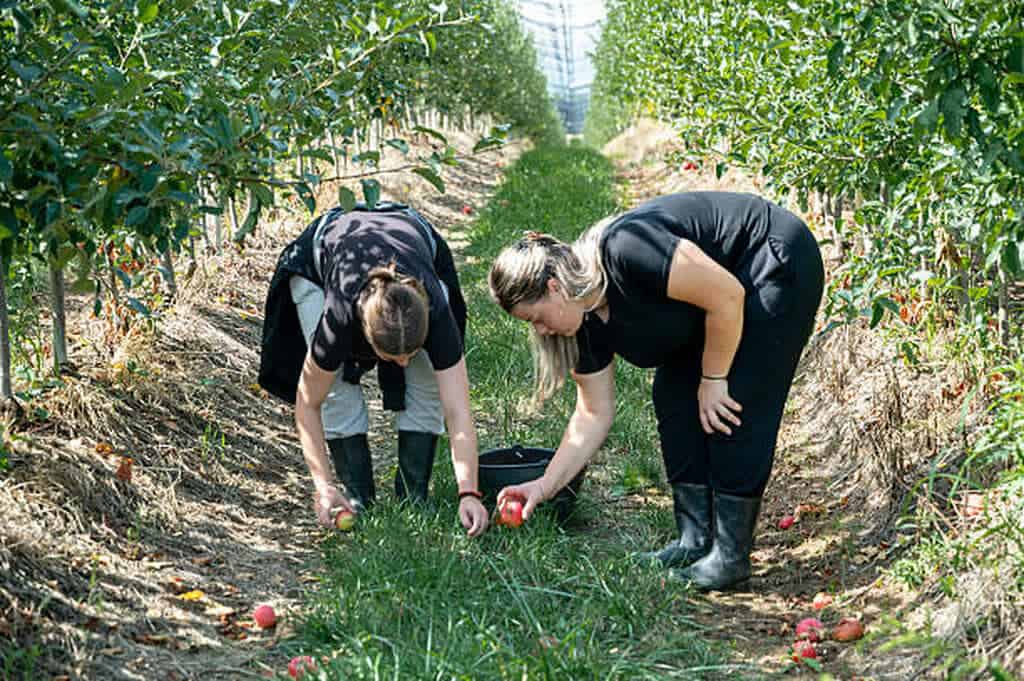
When Apples Are Ready to Harvest
Many beginners rely only on apple color to judge ripeness, but color alone is not always accurate. Some apples develop red coloration before they are fully mature.
Several signs together usually indicate harvest readiness.
Fruit Color Changes
Most apple varieties gradually develop their mature color as sugars increase.
Examples:
- Green apples may lighten slightly
- Red apples deepen in color
- Yellow varieties become warmer in tone
Color development improves significantly when apples receive strong sunlight.
Apples Separate Easily From the Tree
A ripe apple should detach relatively easily with a gentle upward twist.
If the fruit must be pulled forcefully, it is usually not fully mature yet.
Seed Color Darkens
Inside ripe apples, seeds often turn:
- Dark brown
- Or nearly black
Immature apples usually contain pale seeds.
Taste and Texture Improve
The best way to judge ripeness is often simply tasting the fruit.
Ripe apples generally become:
- Sweeter
- Crispier
- More aromatic
- Less starchy
Different varieties also have unique harvest timing:
- Early-season apples ripen in summer
- Mid-season apples ripen in early fall
- Late-season apples mature in late fall
Planting multiple varieties with different harvest windows can extend the apple season significantly.
How to Harvest Apples Without Damage
Apples bruise more easily than many beginners realize. Rough handling shortens storage life and increases the risk of rot.
Use a Gentle Twisting Motion
To harvest:
- Lift the apple upward slightly
- Twist gently
- Allow the stem to separate naturally
Avoid pulling straight downward because this may damage:
- Fruit spurs
- Branches
- Next year’s flower buds
Leaving the stem attached also helps improve storage life.
Avoid Dropping Fruit
Even small impacts may bruise apples internally.
Use:
- Baskets
- Picking bags
- Soft containers
to reduce damage during harvest.
Harvest During Dry Weather
Wet apples spoil more quickly in storage.
If possible:
- Harvest during dry conditions
- Allow morning dew to evaporate first
Dry fruit stores more successfully over long periods.
Sort Apples Immediately
Separate:
- Damaged fruit
- Bruised apples
- Insect-damaged fruit
from healthy storage apples.
Even one rotting apple can accelerate spoilage among nearby fruit.
How to Store Apples Properly
Different apple varieties have dramatically different storage life.
Some early apples remain fresh only for:
- A few weeks
while late-season storage varieties may last:
- Several months under proper conditions
Store Apples in Cool Temperatures
Apples store best in:
- Cold environments
- High humidity
- Low light
Ideal storage temperatures are usually just above freezing.
Good storage locations may include:
- Root cellars
- Refrigerators
- Cool basements
- Cold garages in mild climates
Warm temperatures accelerate ripening and spoilage.
Maintain Moderate Humidity
Apples lose moisture gradually during storage.
Low humidity may cause:
- Shriveling
- Soft texture
- Loss of crispness
However, excessive moisture encourages mold growth.
Allow Air Circulation
Do not pack apples tightly without airflow.
Good ventilation helps reduce:
- Rot
- Condensation
- Mold development
Some gardeners wrap individual apples in paper to reduce fruit-to-fruit contact during long-term storage.
Store Only Healthy Fruit
Damaged apples deteriorate much faster than perfect fruit.
Avoid storing apples with:
- Cracks
- Bruises
- Insect damage
- Soft spots
These fruits should be used quickly instead.
Signs Apples Are Going Bad
Even properly stored apples eventually begin deteriorating.
Common spoilage signs include:
- Soft mushy texture
- Wrinkled skin
- Mold growth
- Sour fermented smell
- Dark internal breakdown
Regular inspection helps remove spoiled fruit before nearby apples become affected.
Which Apple Varieties Store Best?
Some apples are naturally excellent storage varieties.
Long-storage apples often include:
- Fuji
- Granny Smith
- Enterprise
- GoldRush
- Pink Lady
These varieties may remain crisp for months under ideal conditions.
Early-season apples such as McIntosh usually have shorter storage life and are best enjoyed fresh.
Why Proper Harvest Timing Matters
Harvest timing affects much more than flavor alone.
Properly harvested apples usually:
- Store longer
- Taste sweeter
- Maintain better texture
- Resist bruising better
Harvesting too early often results in:
- Starchy flavor
- Reduced sweetness
- Poor storage quality
Overripe apples soften rapidly and become more vulnerable to insects and disease.
Learning your variety’s ideal harvest window improves both fresh eating quality and long-term storage success.
Seasonal Apple Tree Care Calendar
Apple tree care changes throughout the year. Each season affects the tree differently, and understanding these seasonal cycles helps beginners maintain healthier trees and improve long-term fruit production.
Many common problems occur because important maintenance tasks are skipped at the wrong time of year. For example:
- Poor pruning timing may reduce fruit production
- Missed spring disease prevention can lead to fungal outbreaks
- Inadequate summer watering may reduce fruit quality
- Weak winter protection can damage young trees
Following a seasonal care routine keeps apple trees healthier, more productive, and easier to manage over time.
Spring Apple Tree Care
Spring is one of the busiest and most important seasons for apple tree maintenance. As temperatures rise, trees break dormancy and begin producing new leaves, flowers, and shoots.
This early growth period strongly affects the entire upcoming harvest season.
Finish Dormant Pruning
Late winter and early spring are ideal times to complete major pruning before active growth begins.
Pruning during this period helps:
- Improve airflow
- Shape the canopy
- Remove diseased wood
- Increase sunlight penetration
Avoid delaying heavy pruning too late into active spring growth.
Apply Fertilizer if Needed
If soil fertility is low, spring is usually the best time for balanced fertilization.
Nutrients during spring support:
- Leaf development
- Root growth
- Flower production
Avoid excessive nitrogen because overly vigorous growth may increase disease risk and reduce fruiting.
Watch for Blossoms and Pollinators
Spring bloom period is critical for pollination success.
During flowering:
- Avoid spraying insecticides
- Encourage bee activity
- Monitor weather conditions
Cold rainy weather during bloom may reduce pollination rates temporarily.
Monitor Early Disease Signs
Many fungal diseases begin spreading during cool wet spring weather.
Check trees regularly for:
- Leaf spotting
- Blossom damage
- Wilting shoots
- Mildew growth
Early intervention is much easier than treating severe infections later.
Summer Apple Tree Care
Summer focuses heavily on fruit development, moisture management, and pest monitoring.
As apples enlarge, trees require stable growing conditions to maintain fruit quality.
Water During Dry Periods
Consistent watering is especially important during:
- Heat waves
- Drought conditions
- Fruit enlargement
Irregular moisture can cause:
- Fruit cracking
- Bitter apples
- Premature fruit drop
- Reduced sweetness
Deep watering is usually more effective than frequent shallow watering.
Thin Excess Fruit
Fruit thinning often occurs in early summer after natural June drop.
Proper thinning:
- Improves fruit size
- Reduces branch stress
- Improves airflow
- Encourages annual production consistency
Heavy overloaded branches are more vulnerable to breakage during storms or strong winds.
Monitor for Pests and Disease
Warm summer weather increases activity from:
- Codling moths
- Aphids
- Mites
- Fungal pathogens
Inspect trees regularly for:
- Damaged fruit
- Leaf discoloration
- Holes in apples
- Webbing or insect colonies
Early monitoring prevents small issues from becoming severe infestations.
Manage Excessive Growth
Some vigorous trees produce dense summer growth that blocks airflow and sunlight.
Light summer pruning may help:
- Open crowded canopies
- Improve fruit exposure
- Reduce excessive shading
Avoid overly aggressive summer pruning during extreme heat.
Fall Apple Tree Care
Fall is harvest season for most apple varieties. It is also the time to prepare trees for winter dormancy.
Harvest Apples Carefully
Pick apples when they:
- Detach easily
- Reach full flavor
- Develop mature coloration
Damaged or bruised apples should be used quickly rather than stored long term.
Clean Fallen Fruit and Leaves
Orchard sanitation becomes extremely important during fall.
Removing:
- Fallen apples
- Diseased fruit
- Infected leaves
helps reduce pest and fungal populations before winter.
Many diseases survive inside orchard debris and reappear the following spring.
Refresh Mulch
Adding fresh mulch before winter helps:
- Protect roots
- Stabilize soil temperature
- Improve moisture retention
Keep mulch away from direct trunk contact.
Reduce Late-Season Fertilization
Avoid stimulating tender new growth late in the season because it may not harden properly before winter arrives.
Trees need time to transition into dormancy naturally.
Winter Apple Tree Care
Winter is the dormant season for apple trees. While growth slows dramatically above ground, winter care still plays an important role in long-term health.
Protect Young Trees
Young trees are more vulnerable to:
- Rodent damage
- Sunscald
- Bark cracking
- Extreme cold
Tree guards or wraps help protect trunks during winter months.
Monitor Snow and Ice Damage
Heavy snow or ice accumulation may break weak branches.
Removing excessive buildup carefully can reduce structural damage.
Plan Dormant Pruning
Winter is an ideal time to evaluate tree structure before pruning season begins.
Without leaves, it becomes easier to identify:
- Crossing branches
- Weak structure
- Dead wood
- Crowded growth
Prevent Rodent Damage
Mice and voles sometimes feed on bark beneath snow cover during winter.
Keeping grass short and using trunk guards reduces this risk significantly.
Allow Natural Dormancy
Apple trees require winter dormancy for healthy spring growth.
Dormancy helps:
- Reset growth cycles
- Improve flowering
- Support fruit development
Avoid forcing premature growth during warm winter periods.
Consistent seasonal care creates healthier trees that become more productive and disease-resistant over time. Apple growing is not about performing one major task perfectly — it is about maintaining steady yearly routines that support the tree throughout every stage of the growing cycle.
Common Beginner Mistakes When Growing Apples
Apple trees are relatively forgiving, but certain beginner mistakes can reduce fruit production, weaken tree health, or create long-term maintenance problems. Many of these issues are avoidable with proper planning and basic seasonal care.
New growers often focus heavily on planting while underestimating the importance of pollination, pruning, spacing, and long-term maintenance. Others expect fast results and become discouraged when young trees take time to mature.
Understanding the most common mistakes early helps beginners avoid years of frustration and improves the chances of building healthy productive trees from the start.
Choosing the Wrong Variety
One of the biggest mistakes is planting an apple variety that does not suit the local climate.
Some apple trees require:
- Long cold winters
- High chill hours
- Dry conditions
- Specific disease resistance
A variety that performs well in one region may struggle badly in another.
For example:
- Cold-climate apples may fail in warm southern regions
- Humid climates increase fungal disease pressure
- Low-chill areas require special varieties
Before planting, always research:
- USDA hardiness zones
- Chill hour requirements
- Disease resistance
- Pollination compatibility
Beginners usually have the easiest success with locally recommended varieties from nearby nurseries.
Ignoring Pollination Requirements
Many beginners plant only one apple tree without realizing that most apple varieties require cross-pollination.
Without proper pollination:
- Blossoms may fall off
- Fruit production stays low
- Apples may develop poorly
Pollination problems are especially common in small backyard gardens where only a single tree is planted.
To improve pollination:
- Plant compatible varieties nearby
- Encourage bee activity
- Avoid spraying insecticides during bloom
- Consider crabapple pollinators
Even self-fertile varieties often produce much better harvests when another compatible tree is present.
Planting in Shade
Apple trees need strong sunlight to produce healthy fruit and resist disease.
Trees planted in shaded areas often develop:
- Weak growth
- Small harvests
- Bland fruit
- Increased fungal disease
A minimum of 6–8 hours of direct sunlight daily is usually necessary for good production.
Shade from:
- Buildings
- Large trees
- Fences
can significantly reduce fruit quality over time.
Many beginners underestimate how much sunlight mature trees actually require.
Overwatering
New growers often assume more water automatically means healthier trees. In reality, constantly wet soil can damage roots and weaken the tree.
Overwatering may cause:
- Yellow leaves
- Root rot
- Poor growth
- Wilting despite wet soil
Apple roots need oxygen as well as moisture.
Deep occasional watering is usually much healthier than frequent shallow watering.
Proper drainage is especially important in heavy clay soils where water drains slowly.
Skipping Pruning
Many beginners avoid pruning because they fear damaging the tree. However, neglected apple trees gradually become overcrowded and less productive.
Without regular pruning:
- Airflow decreases
- Disease pressure increases
- Fruit quality declines
- Branches weaken
Annual pruning helps maintain:
- Sunlight penetration
- Strong structure
- Fruit production
- Easier harvesting
Even light yearly pruning is far better than allowing years of unmanaged growth.
Neglecting Pest Prevention
Pest problems become much harder to control once infestations are severe.
Some beginners only react after:
- Fruit damage appears
- Leaves curl heavily
- Insects become widespread
Regular inspection is one of the simplest forms of prevention.
Checking trees consistently allows early detection of:
- Aphids
- Codling moths
- Leaf disease
- Bark damage
- Fruit problems
Healthy orchard sanitation also reduces many pest populations naturally.
Expecting Fruit Too Quickly
One of the most common beginner frustrations is impatience.
Apple trees take time to establish roots and develop structure before producing heavy crops.
Typical fruiting timelines:
- Dwarf trees: 2–4 years
- Semi-dwarf trees: 4–6 years
- Standard trees: much longer
Even after fruiting begins, early harvests are usually small.
Some beginners become discouraged and stop maintaining trees before they fully mature. However, patience is a major part of successful fruit growing.
Well-maintained apple trees often become more productive every year as they mature.
Planting Trees Too Deep
Improper planting depth can create long-term health problems.
The graft union should remain above soil level after planting. Buried graft unions may lead to:
- Weak growth
- Rot problems
- Loss of rootstock benefits
This mistake is extremely common among beginners.
Allowing Grass to Grow Against the Trunk
Grass competes aggressively with young apple trees for:
- Water
- Nutrients
- Root space
Trees surrounded by turf often establish more slowly.
Mulch rings help reduce competition and improve moisture retention around roots.
Overfertilizing Young Trees
Excess fertilizer, especially nitrogen, may create:
- Weak rapid growth
- Fewer apples
- Increased disease risk
- Excessive water sprouts
Healthy steady growth is better than aggressive overfeeding.
Many backyard soils already contain enough nutrients for young trees when compost and mulch are used properly.
Ignoring Tree Spacing
Young nursery trees look small, but mature apple trees require significant space.
Crowded trees develop:
- Poor airflow
- Increased disease
- Reduced sunlight penetration
- Difficult harvesting conditions
Always plant according to mature tree size rather than current size at planting time.
Most beginner mistakes are easy to fix once identified early. Apple growing is less about perfection and more about building healthy long-term habits that support the tree season after season.
FAQ About How to Grow Apples
How long does it take to grow apples?
The time depends mainly on the type of apple tree you plant.
Typical timelines:
- Dwarf apple trees: 2–4 years
- Semi-dwarf trees: 4–6 years
- Standard trees: 6–10 years
Young trees spend their early years building roots and branch structure before producing large harvests. Even after fruiting begins, production usually increases gradually as the tree matures.
Can you grow apples from seeds?
Yes, but growing apples from seed is unpredictable and usually not recommended for beginners.
Apple seeds do not grow true to the original variety. A seed taken from a Honeycrisp apple, for example, will likely produce completely different fruit.
Seed-grown trees also:
- Take much longer to fruit
- Produce inconsistent fruit quality
- May have poor disease resistance
Most home growers use grafted nursery trees because they provide:
- Faster fruit production
- Predictable apple quality
- Controlled tree size
Do I need two apple trees?
In most cases, yes.
Most apple trees require cross-pollination from another compatible apple variety nearby in order to produce fruit. Without proper pollination, trees may flower heavily but fail to develop apples.
Some varieties are partially self-fertile, but even those usually produce better harvests with a pollination partner nearby.
Crabapple trees can also help pollinate many apple varieties.
What is the easiest apple tree for beginners?
Disease-resistant varieties are usually the easiest for beginners because they require less spraying and maintenance.
Popular beginner-friendly options include:
- Liberty
- Enterprise
- Gala
- Fuji
- Freedom
Dwarf apple trees are also easier to manage because they stay smaller and produce fruit earlier.
Can apple trees grow in pots?
Yes, dwarf and columnar apple trees can grow successfully in containers.
Container growing works well for:
- Patios
- Small yards
- Balconies
- Urban gardens
However, potted trees require:
- More frequent watering
- Regular fertilization
- Winter root protection
- Careful size management
Large standard apple trees are generally unsuitable for containers.
Why is my apple tree not fruiting?
Several common problems may prevent fruit production.
Possible causes include:
- The tree is still too young
- Poor pollination
- Lack of sunlight
- Late frost damage
- Excess nitrogen fertilizer
- Improper pruning
Pollination problems are one of the most common reasons healthy-looking trees fail to produce apples.
What is the best fertilizer for apple trees?
Apple trees usually benefit from balanced fertilizers rather than extremely high nitrogen products.
Many home gardens can support healthy trees with:
- Compost
- Organic matter
- Mulch
- Slow-release balanced fertilizer
Excess nitrogen may cause:
- Excessive leafy growth
- Reduced fruiting
- Increased disease susceptibility
Soil testing is the best way to identify actual nutrient deficiencies before adding fertilizer unnecessarily.
How much sun do apple trees need?
Apple trees need full sun for healthy growth and quality fruit production.
Most trees require:
- At least 6–8 hours of direct sunlight daily
Insufficient sunlight may lead to:
- Weak growth
- Poor fruit color
- Reduced sweetness
- Increased disease problems
Open areas with strong airflow and sunlight are ideal.
How often should apple trees be watered?
Young trees usually need more frequent watering than mature trees.
In general:
- Deep watering once or twice weekly is better than shallow daily watering
- Trees need more water during hot dry weather
- Containers require more frequent watering than in-ground trees
The goal is moist but well-drained soil rather than constantly wet conditions.
Are apple trees difficult to maintain?
Apple trees require regular seasonal care, but they are manageable for most beginners when planted correctly.
The main maintenance tasks include:
- Watering
- Pruning
- Monitoring pests
- Fruit thinning
- Seasonal cleanup
Disease-resistant varieties dramatically reduce maintenance difficulty.
Many beginners find apple growing much easier once they establish a simple yearly routine.
What month should you plant apple trees?
The best planting time is usually:
- Early spring
- Or late fall
Cool weather allows roots to establish before summer heat arrives.
Bare-root apple trees are most commonly planted in spring while dormant.
Avoid planting during:
- Extreme summer heat
- Frozen winter soil
- Waterlogged conditions
Can apple trees survive winter?
Yes, most apple trees are naturally cold-hardy and require winter dormancy for healthy spring growth.
However, extreme cold can damage:
- Young trees
- Roots in containers
- Blossoms during late frosts
Winter protection may be necessary for:
- Newly planted trees
- Potted trees
- Young trunks vulnerable to rodents or sunscald
Choosing varieties suited to your USDA hardiness zone is extremely important for winter survival.
Final Thoughts
Learning how to grow apples successfully takes patience, but it is one of the most rewarding long-term gardening projects for beginners. A healthy apple tree can provide decades of harvests while adding beauty, shade, and seasonal interest to your yard.
The most important factor is starting with the right foundation. Choosing an apple variety suited to your climate, planting it in full sun, providing proper pollination, and maintaining yearly pruning routines will solve most problems before they begin.
Apple growing does not require perfection. Even experienced growers deal with occasional pests, weather damage, or uneven harvests. What matters most is consistency. Trees that receive regular seasonal care gradually become stronger, more productive, and easier to manage over time.
For beginners, disease-resistant dwarf or semi-dwarf varieties are usually the easiest place to start. These trees produce fruit earlier, require less maintenance, and fit well into most backyard spaces.
As your experience grows, you can expand into:
- Multiple apple varieties
- Organic growing methods
- Espalier systems
- Backyard orchards
- Long-term fruit storage
The key is simply getting started. One healthy apple tree can eventually produce hundreds of apples every season and remain productive for decades with proper care.
With patience, good sunlight, healthy soil, and consistent maintenance, even first-time gardeners can successfully grow flavorful homegrown apples year after year.