Apple tree diseases reduce fruit yield, weaken tree vigor, and shorten orchard lifespan when they are not identified early. Most diseases begin with subtle symptoms such as olive-green leaf spots, wilted blossoms, cracked bark, or rotting fruit. Because several diseases produce similar symptoms during their early stages, identifying the underlying cause is the first step toward effective treatment and long-term disease prevention.
Apple trees are susceptible to fungal diseases, bacterial infections, and root pathogens throughout the growing season. Environmental conditions such as prolonged leaf wetness, frequent spring rainfall, high humidity, and poor air circulation create favorable conditions for many pathogens to infect leaves, flowers, shoots, and fruit. Orchard management practices—including pruning, irrigation, sanitation, and cultivar selection—also influence how quickly diseases spread and how severe outbreaks become.
This guide explains the most common apple tree diseases, how to recognize their symptoms, what causes them, and which treatment methods provide the best results. It also covers practical prevention strategies, seasonal disease management, and common diagnostic mistakes to help home gardeners and commercial growers protect tree health, improve fruit quality, and reduce future disease pressure.
What are the most common apple tree diseases?
There are seven apple tree diseases responsible for most infections in home gardens and commercial orchards. These diseases affect different parts of the tree, spread under different environmental conditions, and require different management strategies. Correct identification is essential because treatments that work for one disease may have little or no effect on another.
Apple scab
Apple scab is the most common fungal disease of apple trees. It is caused by Venturia inaequalis and primarily infects young leaves, blossoms, and developing fruit during cool, wet spring weather.
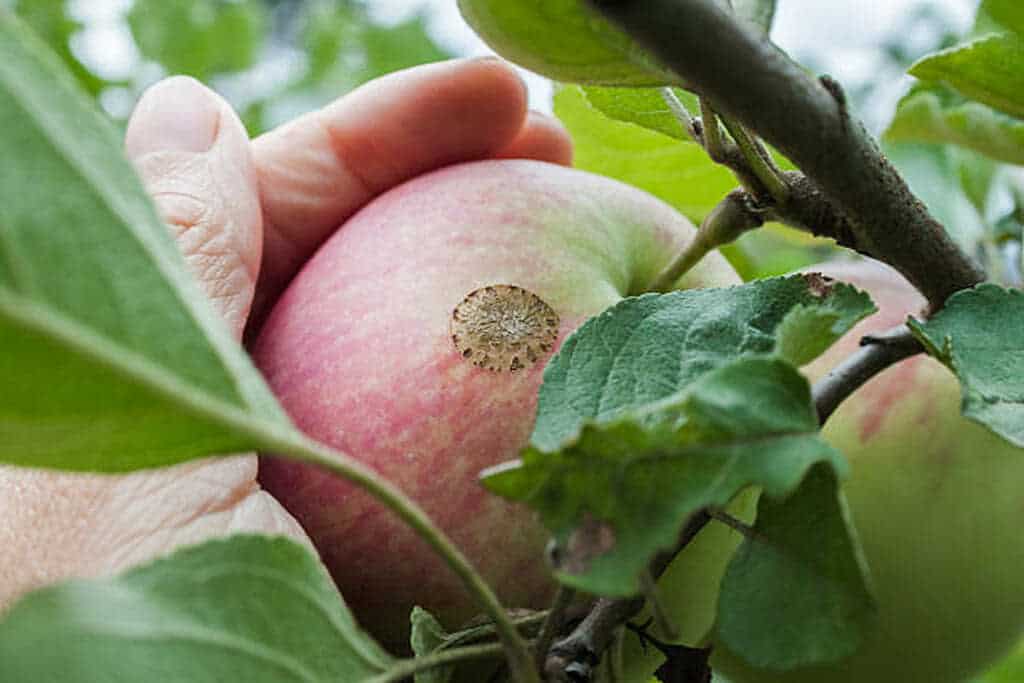
Early symptoms appear as olive-green, velvety spots on young leaves. As the disease progresses, the lesions become darker and larger, causing leaves to curl, yellow, and drop prematurely. Fruit develops dark, corky scabs that reduce market quality and increase the risk of secondary infections.
The fungus survives winter in fallen leaves and releases spores during spring rainfall. Rain splashes and wind spread the spores to newly emerging foliage, making orchard sanitation and timely fungicide applications critical for disease control.
Fire blight
Fire blight is the most destructive bacterial disease affecting apple trees. It is caused by Erwinia amylovora and spreads rapidly during warm, humid weather, particularly while trees are flowering.
Infected blossoms, shoots, and leaves suddenly wilt, turn dark brown or black, and remain attached to the tree. Young shoots often bend into a distinctive shepherd’s crook shape, while infected branches may produce sticky amber-colored bacterial ooze.
Unlike fungal diseases, fire blight cannot be cured after bacteria colonize woody tissue. Removing infected branches well below visible symptoms and disinfecting pruning tools between cuts are the most effective ways to limit further spread.
Cedar apple rust
Cedar apple rust requires two host plants to complete its life cycle: apple trees and juniper species. The disease is caused by Gymnosporangium juniperi-virginianae and becomes common where both hosts grow close together.
Small yellow or orange spots first appear on leaves in late spring. As the infection develops, bright orange lesions enlarge and tubular structures form on the underside of leaves, releasing spores that later infect nearby junipers.
Although cedar apple rust rarely kills mature trees, repeated infections reduce photosynthesis, weaken tree vigor, and decrease fruit production over multiple growing seasons.
Powdery mildew
Powdery mildew infects young shoots, leaves, and flower buds without requiring free water on the leaf surface. The disease is caused by Podosphaera leucotricha and develops rapidly under warm temperatures combined with high humidity.
The most recognizable symptom is a white or gray powder-like coating covering young foliage. Infected leaves become narrow, curled, and brittle, while flower buds may fail to open normally. Severe infections reduce shoot growth and limit fruit production during the current and following season.
Pruning infected shoots during dormancy and maintaining good canopy airflow significantly reduce disease pressure.
Black rot
Black rot affects leaves, fruit, and woody tissue throughout the growing season. The disease is caused by Botryosphaeria obtusa and is especially problematic in neglected orchards containing dead wood.
Leaf infections begin as purple spots that gradually expand into circular lesions with concentric rings. Fruit develops dark, sunken rot that eventually turns into hard, black mummies remaining attached to branches. Branch cankers may girdle limbs and reduce overall tree health.
Removing dead branches, mummified fruit, and infected debris is one of the most effective cultural practices for reducing future infections.
Bitter rot
Bitter rot primarily damages ripening apples during warm and humid weather. The disease develops quickly in mid-to-late summer and can destroy large portions of a crop before harvest.
Symptoms begin as small brown lesions that rapidly expand into circular, sunken areas. Under humid conditions, concentric rings of pink or salmon-colored spores develop on the fruit surface. Infected apples eventually shrivel or fall prematurely.
Because the pathogen survives on dead wood and fruit mummies, orchard sanitation plays an important role alongside preventive fungicide programs.
Phytophthora root rot
Phytophthora root rot attacks the root system and lower trunk, gradually reducing the tree’s ability to absorb water and nutrients. The disease becomes most severe in orchards with poorly drained or waterlogged soils.
Early symptoms often resemble drought stress, including slow growth, yellowing leaves, reduced shoot development, and premature leaf drop. As root damage progresses, the bark near the crown becomes dark, soft, and water-soaked. Severely infected trees eventually decline and die.
Improving soil drainage, avoiding excessive irrigation, and selecting rootstocks with higher disease resistance are the most effective long-term strategies for managing Phytophthora root rot.
How can you identify apple tree diseases?
Accurate disease identification begins by observing which part of the tree shows symptoms first. Apple tree diseases rarely affect every part of the tree at the same time. Some pathogens attack leaves first, while others infect blossoms, fruit, branches, or roots. Examining the location, color, shape, and progression of symptoms helps narrow down the possible cause before selecting a treatment.
Which symptoms appear on leaves, fruit, branches, and roots?
Leaf symptoms
Leaf symptoms are usually the earliest sign of disease. Fungal pathogens commonly infect young leaves during spring when moisture remains on the canopy for extended periods.
Common leaf symptoms include:
- Olive-green velvety spots that gradually darken, indicating apple scab.
- Bright yellow or orange circular spots, suggesting cedar apple rust.
- White powdery growth covering young leaves and shoots, characteristic of powdery mildew.
- Purple or brown lesions with concentric rings, often associated with black rot.
Healthy leaves maintain a uniform green color and smooth surface. Any sudden discoloration, spotting, curling, or premature leaf drop should be investigated because early infections are easier to manage than advanced outbreaks.
Fruit symptoms
Fruit symptoms often become noticeable several weeks after leaf infections develop. The appearance of lesions, discoloration, or decay provides valuable clues for diagnosis.
Typical fruit symptoms include:
- Rough, corky black scabs caused by apple scab.
- Sunken brown lesions with pink spore masses caused by bitter rot.
- Firm black decay that gradually mummifies fruit, indicating black rot.
- Surface blemishes from sooty blotch and flyspeck that reduce appearance without penetrating deep into the flesh.
Evaluating whether fruit rot begins near the stem, blossom end, or random locations can further improve diagnostic accuracy.
Branch and shoot symptoms
Shoot dieback usually indicates a more aggressive disease than leaf spotting alone. Bacterial infections frequently invade young shoots through blossoms or wounds before spreading into woody tissue.
Warning signs include:
- Blackened shoots forming a shepherd’s crook, a classic symptom of fire blight.
- Sunken bark cankers that gradually expand along branches.
- Cracked or peeling bark exposing dark internal tissue.
- Dead twigs that remain attached long after surrounding growth has developed.
Because branch infections can continue spreading internally, prompt pruning is essential to prevent permanent structural damage.
Root and crown symptoms
Root diseases are difficult to detect because symptoms develop below ground before becoming visible in the canopy. Trees often appear unhealthy for months before root damage is discovered.
Common indicators include:
- Poor annual shoot growth.
- Small or pale leaves.
- Premature leaf drop during summer.
- Sparse flowering.
- Reduced fruit production.
- Soft, dark bark around the crown near the soil line.
When these symptoms occur alongside poorly drained soil or standing water, Phytophthora root rot becomes a likely diagnosis.
How can similar diseases be distinguished?
Several apple tree diseases produce nearly identical early symptoms, making careful observation essential. Comparing lesion color, disease location, seasonal timing, and environmental conditions often provides enough information to distinguish one disease from another.
For example, apple scab and black rot both produce dark leaf spots. Apple scab typically forms olive-green, velvety lesions on young leaves during cool, wet spring weather, whereas black rot develops purple-bordered lesions with concentric rings later in the season.
Fire blight and drought stress may both cause wilted shoots. However, fire blight rapidly blackens blossoms and young shoots, produces the characteristic shepherd’s crook, and may exude sticky bacterial ooze, while drought stress causes uniform wilting without cankers or blackened tissue.
Similarly, bitter rot and black rot both affect fruit. Bitter rot creates soft, sunken lesions with concentric pink or salmon-colored spore masses, whereas black rot produces firm, black decay that eventually dries into hard fruit mummies.
When symptoms overlap or multiple diseases occur simultaneously, monitoring how symptoms progress over several days and considering recent weather conditions usually leads to a more accurate diagnosis. Correct identification prevents unnecessary pesticide applications and allows growers to implement the most effective management strategy before infections spread further.
What causes apple tree diseases?
Apple tree diseases develop when susceptible trees are exposed to pathogens under favorable environmental conditions. Most infections result from the interaction of three factors: the presence of a disease-causing organism, environmental conditions that support its growth, and a host tree that is vulnerable because of its variety, age, or health. Breaking any one of these factors can significantly reduce disease pressure.
Fungal pathogens
Fungi cause most apple tree diseases. Pathogens such as Venturia inaequalis, Podosphaera leucotricha, Botryosphaeria obtusa, and Phytophthora species produce spores that spread through wind, rain splash, irrigation water, or infected plant material.
Fungal infections become most severe when leaves remain wet for several hours. Spring rainfall, heavy dew, dense canopies, and poor air circulation allow spores to germinate and penetrate young leaves, blossoms, and fruit. Once established, many fungi continue producing new spores throughout the growing season, creating repeated infection cycles after each rain event.
Bacterial pathogens
Fire blight is the primary bacterial disease of apple trees. The bacterium Erwinia amylovora survives in infected branches during winter and becomes active as temperatures rise in spring.
During flowering, bacteria multiply rapidly and spread through rain, insects, contaminated pruning tools, and strong winds. Blossoms serve as the main entry point, allowing the infection to move into shoots and larger branches. Hail damage, pruning wounds, and insect feeding also provide entry sites for bacterial infection.
Environmental conditions
Weather has a direct influence on disease outbreaks. Temperature, rainfall, humidity, and leaf wetness determine when pathogens infect trees and how quickly diseases spread.
Several environmental factors consistently increase disease risk:
- Frequent spring rainfall prolongs leaf wetness and favors fungal infections.
- High humidity accelerates spore production and disease development.
- Poorly drained soils encourage root and crown rot.
- Warm temperatures promote rapid bacterial multiplication.
- Extended periods of cloudy weather slow leaf drying after rain or irrigation.
Because weather conditions cannot be controlled, growers often adjust management practices based on disease forecasts and seasonal infection risk.
Poor orchard management
Management practices can either suppress or accelerate disease development. Trees growing in crowded orchards with dense canopies retain moisture longer, creating an ideal environment for fungal pathogens.
Several cultural practices increase disease pressure:
- Leaving infected leaves beneath trees after autumn.
- Allowing mummified fruit to remain on branches.
- Delaying the removal of diseased shoots.
- Overhead irrigation that keeps foliage wet.
- Excessive nitrogen fertilization that stimulates highly susceptible new growth.
- Failing to disinfect pruning tools after removing infected branches.
In contrast, regular pruning, sanitation, balanced fertilization, proper irrigation, and adequate tree spacing interrupt disease cycles and reduce the need for repeated chemical treatments.
Read more: Apple Tree Care: The Complete Year-Round Guide for Healthy Trees and Better Harvests
How do you treat apple tree diseases?
Effective treatment depends on identifying the disease correctly and intervening before infections become widespread. No single treatment controls every apple tree disease. Fungal diseases generally require preventive fungicides and sanitation, while bacterial diseases rely primarily on pruning and limiting pathogen spread.
When should fungicides and bactericides be used?
Preventive applications are more effective than curative treatments for most apple tree diseases. Fungicides protect healthy tissue from infection but usually cannot reverse damage that has already occurred.
Fungicides are commonly applied:
- Before bud break to reduce overwintering inoculum.
- During green tip and pink bud stages when new tissue becomes susceptible.
- Throughout flowering and early fruit development if wet weather persists.
- According to disease forecasting models during periods of high infection risk.
Bactericides, including copper-based products and selected antibiotics where permitted, are mainly used to suppress fire blight during bloom. Their effectiveness depends on accurate timing because they protect blossoms before bacteria establish infections rather than eliminating bacteria inside woody tissue.
Always follow local regulations and product labels regarding application timing, dosage, pre-harvest intervals, and resistance management.
Which pruning and sanitation practices improve recovery?
Pruning and sanitation remove sources of infection and reduce future disease pressure. These practices remain essential regardless of whether chemical or organic treatments are used.
Key sanitation measures include:
- Remove infected shoots at least 20–30 cm (8–12 inches) below visible symptoms when managing fire blight.
- Prune dead, diseased, or damaged branches during dry weather to reduce pathogen spread.
- Disinfect pruning tools between cuts when removing bacterial infections.
- Collect and destroy fallen leaves carrying apple scab spores.
- Remove mummified fruit and dead wood that harbor fungal pathogens.
- Improve airflow by thinning crowded branches and maintaining an open canopy.
After pruning, continue monitoring trees throughout the growing season because secondary infections may develop following periods of prolonged rainfall or warm, humid weather. Early detection allows additional pruning or protective sprays before diseases spread to healthy tissue.
How can you prevent apple tree diseases?
Preventing apple tree diseases is more effective and less expensive than treating established infections. A preventive management program reduces pathogen populations before symptoms appear, limits disease spread during the growing season, and improves overall tree health. Successful prevention combines resistant cultivars, proper orchard maintenance, and routine monitoring rather than relying on fungicides alone.
Choose disease-resistant cultivars
Selecting resistant apple varieties provides the first line of defense against many common diseases. Modern cultivars have been bred to reduce susceptibility to diseases such as apple scab, powdery mildew, and fire blight, lowering both disease severity and the number of spray applications required.
When planting new trees, evaluate varieties based on local disease pressure, climate, and rootstock compatibility. Choosing cultivars adapted to regional conditions increases long-term tree health and productivity.
Improve air circulation
Good airflow reduces the amount of time leaves remain wet after rain or irrigation. Since many fungal pathogens require prolonged leaf wetness to infect new tissue, increasing ventilation makes the environment less favorable for disease development.
Improve air circulation by:
- Pruning overcrowded branches annually.
- Maintaining proper spacing between trees.
- Controlling excessive vegetative growth.
- Removing nearby vegetation that blocks airflow.
An open canopy also improves spray coverage when fungicides are required.
Manage irrigation carefully
Proper irrigation minimizes plant stress without creating conditions that favor pathogens. Excessive moisture encourages fungal diseases and root rot, while prolonged drought weakens trees and reduces their ability to resist infection.
Recommended irrigation practices include:
- Water deeply rather than frequently.
- Irrigate early in the morning so foliage dries quickly.
- Use drip irrigation whenever possible instead of overhead sprinklers.
- Avoid saturated soil around the root zone.
Maintaining consistent soil moisture supports healthy root development while reducing disease risk.
Remove infected plant debris
Many apple pathogens survive winter in infected leaves, fruit, and dead branches. Leaving infected material in the orchard allows pathogens to produce new spores the following spring.
At the end of each growing season:
- Collect and destroy fallen leaves.
- Remove mummified fruit from both the tree and the ground.
- Cut out dead or diseased wood.
- Eliminate volunteer apple seedlings that may serve as alternative hosts.
Consistent sanitation interrupts the disease cycle and lowers infection pressure each year.
Monitor trees throughout the growing season
Regular inspections allow diseases to be detected before they spread extensively. Early intervention often prevents small infections from developing into orchard-wide outbreaks.
Inspect trees every one to two weeks during spring and summer, paying close attention to:
- Newly emerged leaves.
- Flower clusters.
- Developing fruit.
- Young shoots.
- Areas that remain shaded or humid after rainfall.
Keeping simple records of disease occurrence, weather conditions, and previous treatments also helps improve management decisions in future seasons.
Which apple tree diseases cause the greatest damage?
Not all apple tree diseases have the same economic or horticultural impact. Some primarily reduce fruit quality, while others kill young trees or spread rapidly through an orchard. Understanding the severity of each disease helps growers prioritize monitoring and control efforts.
Diseases that kill young trees
Fire blight and Phytophthora root rot are the two diseases most likely to cause tree death.
Fire blight spreads through blossoms and shoots before invading larger branches and the trunk. Young trees may decline within a single growing season if infections reach the main scaffold branches or central leader.
Phytophthora root rot damages the root system, reducing water and nutrient uptake. Trees often decline gradually over several years, but severe infections in poorly drained soils can lead to complete tree loss.
Diseases that reduce fruit quality
Apple scab, bitter rot, black rot, sooty blotch, and flyspeck primarily reduce the marketability of fruit.
Although these diseases do not always kill trees, they can significantly decrease commercial value by causing:
- Surface blemishes.
- Fruit cracking.
- Premature fruit drop.
- Soft or dry fruit rot.
- Reduced storage life.
Even light infections may make fresh-market apples unsuitable for sale despite remaining edible after damaged tissue is removed.
Diseases that spread rapidly
Fire blight spreads faster than any other common apple tree disease. Warm temperatures during bloom, combined with rain or insect activity, allow bacteria to move quickly between blossoms and neighboring trees.
Among fungal diseases, apple scab spreads efficiently during prolonged wet periods because each new infection can produce additional spores capable of initiating secondary infection cycles throughout spring and early summer.
Rapid disease spread highlights the importance of early detection, timely pruning, and preventive treatments before favorable weather conditions trigger widespread outbreaks.
Read more: How to Grow Apples: A Beginner’s Step-by-Step Guide to Healthy Apple Trees
What is the annual apple tree disease prevention schedule?
An effective disease prevention program follows the apple tree’s growth cycle rather than reacting after symptoms appear. Each season presents different disease risks, and timely management reduces infection pressure throughout the year.
Dormant season (Late fall to winter)
Winter is the best time to eliminate overwintering pathogens before new growth begins. Most fungal spores and bacterial inoculum survive in infected leaves, dead branches, and mummified fruit during dormancy.
Recommended tasks include:
- Prune dead, diseased, and crossing branches.
- Remove fruit mummies remaining on the tree.
- Collect and dispose of fallen leaves.
- Eliminate dead wood and cankers where practical.
- Clean and disinfect pruning equipment.
- Improve canopy structure to increase light penetration and airflow.
Dormant copper or horticultural sprays may also be applied where recommended to reduce the initial pathogen population before spring growth.
Spring
Spring is the highest-risk period for most apple tree diseases. Young leaves, blossoms, and shoots are highly susceptible to infection during periods of frequent rainfall and mild temperatures.
Priority actions include:
- Inspect trees weekly for early symptoms.
- Monitor weather forecasts for extended wet periods.
- Apply preventive fungicides according to local disease forecasts when necessary.
- Protect blossoms from fire blight during bloom if conditions favor bacterial infection.
- Remove newly infected shoots immediately to slow disease spread.
Early-season management has the greatest influence on disease pressure for the remainder of the growing season.
Summer
Disease management shifts from prevention to monitoring and limiting secondary infections. Warm temperatures and occasional storms can trigger new outbreaks, especially if infections became established during spring.
Continue to:
- Remove infected fruit as soon as symptoms appear.
- Prune localized infections during dry weather.
- Maintain balanced irrigation without overwatering.
- Control excessive vegetative growth that reduces airflow.
- Monitor fruit regularly as harvest approaches.
Prompt removal of infected material reduces the number of spores available to infect healthy fruit.
After harvest
Post-harvest sanitation prepares the orchard for the following growing season. Disease pressure next spring largely depends on how much infected material remains after harvest.
Essential tasks include:
- Collect fallen fruit.
- Remove damaged branches identified during harvest.
- Rake and dispose of infected leaves.
- Evaluate disease severity and record problem areas.
- Plan pruning, cultivar replacement, or drainage improvements before the next season.
A consistent annual sanitation program reduces overwintering inoculum and improves long-term orchard health.
Frequently asked questions about apple tree diseases
Can an apple tree recover from disease?
Yes, many apple trees recover if diseases are identified early and managed correctly. Recovery depends on the type of disease, the severity of infection, and the overall health of the tree. Fungal diseases such as apple scab and powdery mildew can often be managed successfully through pruning, sanitation, and preventive fungicide applications. Bacterial diseases such as fire blight require immediate removal of infected wood because damaged branches do not heal after infection.
Can fungal diseases spread to nearby trees?
Yes. Most fungal diseases spread through airborne spores or rain splash. Wind, irrigation, insects, contaminated equipment, and infected plant debris also contribute to disease movement within an orchard. Removing infected material and maintaining adequate spacing between trees significantly reduces transmission.
How often should apple trees be inspected?
Inspect apple trees every one to two weeks during the growing season. Increase inspection frequency during prolonged rainy periods, flowering, and early fruit development because these stages present the highest risk for new infections. Regular monitoring allows small problems to be corrected before they become widespread outbreaks.
Can diseased apples still be eaten?
It depends on the disease and the extent of damage. Apples with superficial diseases such as sooty blotch or flyspeck are generally safe after washing or peeling because these fungi remain on the fruit surface. Fruit affected by extensive rot, soft decay, mold growth, or internal breakdown should be discarded since quality and safety cannot be guaranteed.
When should an infected apple tree be removed?
Tree removal should be considered only when recovery is unlikely or the tree becomes a continuing source of infection. Removal is usually recommended when:
- Fire blight has destroyed most of the structural framework.
- Root rot has caused extensive root system failure.
- Large trunk cankers continue expanding despite repeated pruning.
- The tree declines year after year with little healthy new growth.
- Replacing the tree is more practical than repeated treatment.
Removing severely diseased trees protects nearby healthy trees and reduces pathogen levels throughout the orchard.